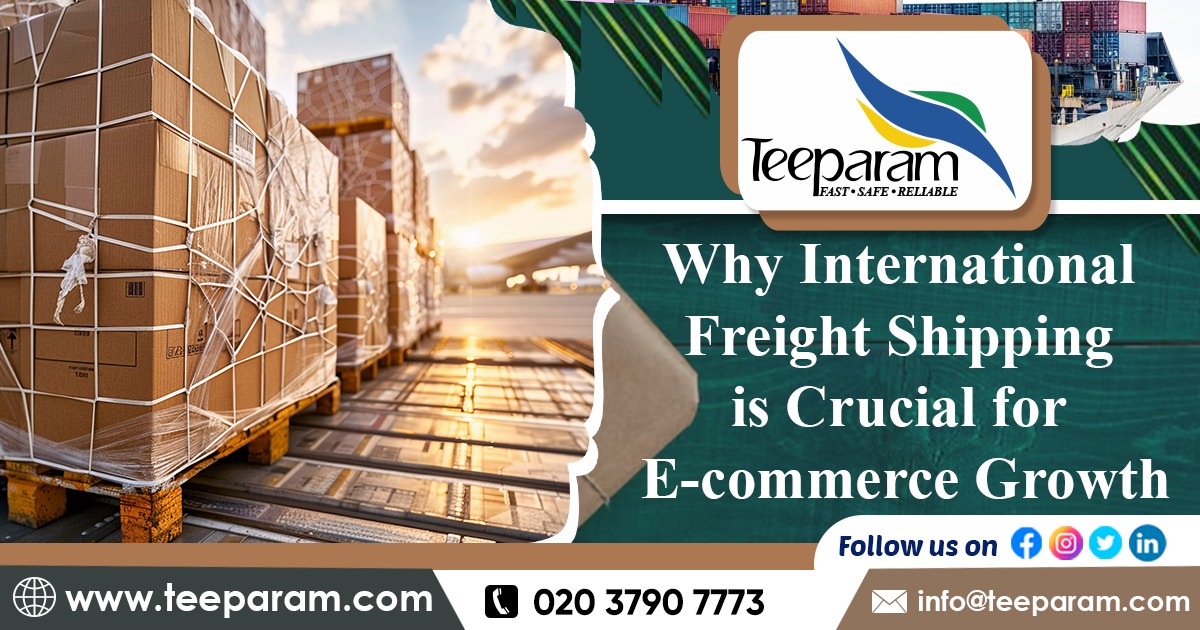
Picture this: It’s a rainy Tuesday afternoon in Manchester, and you’re scrolling through your phone, eyeing a pair of handmade leather boots from a tiny artisan shop in Florence. A few clicks later, and they’re on their way to your doorstep in under two weeks. Magic? Not quite. That’s the quiet power of international freight shipping at work, turning a local dream into a global reality. For e-commerce businesses, especially those starting in the UK, this isn’t just a nice-to-have—it’s the lifeline that’s propelling the whole industry forward. As online shopping surges past borders, reliable freight options are the unsung heroes making it all possible. In this piece, we’ll explore why international shipping isn’t optional anymore; it’s the rocket fuel for growth, blending opportunity with a dash of logistical savvy. Whether you’re a UK seller eyeing the US market or a global giant fine-tuning supply chains, understanding this is key to thriving in 2025 and beyond.
The Big Picture: E-commerce’s Explosive Growth
Let’s kick things off with the big picture. E-commerce isn’t just growing—it’s exploding. Globally, we’re looking at a staggering $6.8 trillion in sales this year alone, with over 2.77 billion people tapping away on their devices to buy everything from gadgets to gourmet teas. That’s more than double what it was a decade ago, and experts reckon it’ll hit $6.4 trillion by 2029, growing at a steady 9.49% clip each year. Closer to home in the UK, the story’s just as compelling. We’ve got about 52 million e-commerce users this year, meaning most of us are ditching the high street for the screen. Internet sales made up 26.3% of total retail in March, edging up from the year before, and we’re on track for another record-breaking £128 billion in revenue by the end of 2024. But here’s the rub: with domestic markets getting crowded—think saturated sales in London or the Midlands—UK businesses are hungry for fresh turf. Enter international freight shipping, the bridge that lets you leap from selling to your neighbours to conquering continents.
Democratising Access: How Freight Levels the Playing Field
At its core, international freight shipping democratises e-commerce. Gone are the days when only behemoths like Amazon could afford to ship across oceans. Today, affordable air, sea, and even rail options mean even a bootstrapped Etsy seller in Bristol can reach customers in Sydney or São Paulo without breaking the bank. Why does this matter so much for growth? Simple: it taps into massive untapped audiences. The UK alone exports £100 billion worth of goods annually, but e-commerce cross-border sales are the real game-changer, projected to spike in 2025 as local economies cool off. For starters, it diversifies revenue streams. Relying solely on UK buyers? Risky business, especially with Brexit’s lingering tariffs and a wobbly pound. Shipping internationally spreads that risk, letting you chase booming markets like Asia’s middle class or the eco-conscious crowds in Scandinavia.
Reaching Customers Worldwide and Fostering Loyalty
Take customer reach: offering global delivery isn’t just polite—it’s expected. Shoppers worldwide want variety, and they want it now. A study from logistics pros shows that 75% of online buyers abandon carts if shipping costs are too steep or options are too limited. Freight shipping flips that script by bundling costs efficiently—think consolidated sea freight for bulkier items like furniture or apparel, keeping prices competitive. Plus, it builds brand loyalty. When a customer in Toronto unboxes your Welsh wool scarf on time, they’re not just thrilled; they’re telling their mates about it, sparking word-of-mouth gold. For UK firms, this means turning one-off sales into repeat global fans, boosting lifetime value by up to 30% in some cases.
Streamlining Operations for Smarter Growth
But it’s not all smooth sailing—freight shipping supercharges operations too. Efficiency is king in e-commerce, where margins are razor-thin. International carriers now boast tracking that’s near real-time, from Liverpool docks to LA warehouses, slashing those nail-biting “where’s my parcel?” queries. Faster customs clearance, thanks to digital paperwork and partnerships with forwarders, means goods spend less time in limbo and more time generating cash. And let’s talk costs: while air freight zips high-value bits like electronics across in days, ocean routes handle the volume for pennies per kilo. For a mid-sized UK clothing brand, this could mean saving 20-40% on logistics, freeing up dosh for marketing or R&D. It’s a virtuous cycle—better shipping leads to happier customers, more sales, and the scale to negotiate even sweeter deals with carriers.
Real-World Wins: UK Brands That Nailed It
Of course, no chat about growth skips the success stories. They’re the proof in the pudding, showing how UK players have cracked the code. Look at ASOS, that homegrown fashion juggernaut from London. Starting as a scrappy student side-hustle in 2000, they now ship to a whopping 196 countries, blending their own lines with 850+ brands. International freight was their secret sauce—partnering with sea and air pros to handle everything from trendy tees to statement heels. The result? Billions in revenue, with cross-border sales making up over half their pie. Or consider The Best Ever Brownie Company, a lockdown-born delight from the Midlands. As orders poured in, DHL eCommerce stepped up with seamless international fulfilment, turning a kitchen-table operation into a global treat empire. Their sales skyrocketed, proving that even niche bakers can go big with the right shipping muscle.
Then there’s Jones Road, the clean-beauty disruptor that’s all about no-fuss makeup. Teaming with UK logistics whizzes, they’ve nailed demand fulfillment for their cult-favorite products, expanding online and in-store across the pond. International shipping let them stock US shelves without the usual headaches, driving 11x growth in new markets and a 19% bump in average order value. These tales aren’t flukes; they’re blueprints. Brands like The Wander Club, peddling adventure gear, hit 19 new countries by leaning on freight forwarders for customs smarts and tracking tech. Lessons? Start small—test waters with express air for high-margin goods—then scale to sea for volume. And always, always localise: tweak packaging for cultural quirks, like eco-friendly wraps for German buyers or festive boxes for Diwali shoppers in India.
Tackling the Hurdles: Challenges and Smart Fixes
Yet, let’s be real—international freight isn’t without its thorns. Tariffs, volatile fuel prices, and that eternal headache of returns can trip up even the savviest seller. Post-Brexit, UK exporters face extra VAT hoops and border checks, adding days (and dosh) to journeys. Geopolitical jitters, from Red Sea disruptions to US-China trade spats, remind us that supply chains are fragile. Returns? A nightmare—up to 30% for fashion—ballooning costs if you’re shipping back across the Atlantic. But here’s the good news: solutions abound. Freight forwarders act like your personal navigators, handling paperwork and compliance so you don’t have to. Tech’s a boon too—AI-driven platforms predict delays, optimise routes, and even automate duty calculations. For returns, reverse logistics pros now offer affordable collection services, turning a pain point into a perk (free returns build trust, after all).
In the UK, government perks like the Export Finance scheme sweeten the pot, offering insurance for overseas risks. Globally, trade pacts like the CPTPP open doors wider, slashing duties for savvy shippers. The key? Partner up. Whether it’s MSC for ocean hauls or DHL for door-to-door, aligning with experts cuts headaches by 50%. And don’t sleep on sustainability—buyers demand it. Green freight options, like low-emission vessels or carbon-offset air, aren’t just ethical; they’re marketable. A UK survey found 60% of shoppers pay more for eco-friendly delivery, so weave that in to stand out.
The Road Ahead: Trends Shaping Tomorrow’s Trade
Peering ahead, the trends scream opportunity. By 2030, cross-border e-commerce could hit $2 trillion, with AI and blockchain turbocharging freight. Imagine smart contracts auto-clearing customs or drones handling the last-mile in rural spots. For UK businesses, the EU’s digital single market beckons, while Asia’s e-tail boom—think Alibaba’s reach—promises partnerships. But it’ll be the hybrids who win: blending online with pop-ups, using freight data to stock local hubs. Challenges like labour shortages? Automation’s got that covered, from robotic warehouses to predictive analytics.
Wrapping It Up: Your Next Move in Global E-commerce
So, why bother with international freight shipping? Because in e-commerce, growth isn’t about selling more to the same folks—it’s about reaching the world, one parcel at a time. For UK entrepreneurs, it’s a chance to punch above your weight, turning “Made in Britain” into a global badge of pride. Globally, it’s the thread stitching economies together, fostering innovation and jobs. If you’re on the fence, dip a toe: audit your setup, chat with a forwarder, and watch sales soar. The high street might be charming, but the world’s your oyster now. What’s stopping you from cracking it open?
Partner Spotlight: Teeparam Logistics – Your Gateway to Global E-commerce Success
When it comes to fueling e-commerce growth through seamless international freight, Teeparam Logistics is a breath of fresh air for UK businesses like yours. Specialising in robust sea freight solutions—from full container loads (FCL) for bulk shipments to less-than-container loads (LCL) for nimble orders—they make crossing borders as straightforward as a Sunday drive down the M25. Whether you’re dispatching artisanal teas from Yorkshire to bustling markets in Mumbai or trendy gadgets to eager shoppers in New York, Teeparam network spans key routes worldwide, blending competitive rates with rock-solid reliability to slash your logistics headaches.
What sets them apart? It’s that blend of old-school service with modern tech—real-time tracking, customs wizardry, and eco-friendly options that tick the sustainability box for today’s conscious consumers. For e-commerce hustlers, this means more time scaling your empire and less fretting over delays or duties. Dive into their full suite at Teeparam Logistics or zoom in on sea freight perks at Sea Freight Services. If you’re ready to turn “local legend” into “global powerhouse,” Teeparam’s got your back—highly recommended for anyone serious about that next big leap.
In today’s interconnected business world, getting crucial documents across borders isn’t just a nicety—it’s often the lifeline of deals, partnerships, and deadlines. Whether you’re a UK-based firm sealing a contract with an Indian supplier or a global entrepreneur shuttling legal papers between Mumbai and Manchester, in order to send business documents from india to the uk, it demands a blend of precision, patience, and a dash of savvy. I’ve been there myself, back when I coordinated shipments for a small export outfit, and let me tell you: one overlooked customs form can turn a two-day delivery into a two-week headache.
This guide is tailored for you—whether you’re sipping tea in London or navigating the bustling streets of Delhi—aiming to demystify the process for UK audiences familiar with HMRC rules and global players who juggle multiple time zones. We’ll cover everything from regulatory hurdles to practical tips, ensuring your invoices, contracts, or NDAs arrive intact and on time. And if you’re looking for a reliable partner, I’ll spotlight Teeparam Logistics later on; they’ve been a game-changer for many in this space.
Why does this matter now? Post-Brexit, UK import rules have tightened, but trade between India and the UK is booming—bilateral trade hit £38 billion in 2023, per recent figures. Documents like commercial agreements or compliance certificates are the unsung heroes fueling that growth. But mishandle them, and you’re staring down delays, fines, or worse: lost trust. Ready to get your paperwork winging its way across the Arabian Sea? Let’s figure it out. Competitive rates of Teeparam makes Teeparam one of the cheapest parcel delivery in uk
Send Business Documents from India to UK:Customs and Regulations
First things first: documents aren’t “goods” in the traditional sense, but they’re still subject to scrutiny. The UK Border Force and Indian export controls treat business papers as imports, so compliance is non-negotiable. Start with the basics—most documents under £135 in value (about ₹14,000) dodge VAT and duties, but anything pricier might trigger a 20% VAT hit plus customs fees. Are businesses importing regularly? Register for an EORI number (Economic Operators Registration and Identification) via GOV.UK—it’s free and takes minutes online.
From the Indian side, you’ll need to adhere to the Foreign Trade Policy. Prohibited items? Steer clear of anything sensitive: no controlled substances, weapons, or even certain seeds tucked into envelopes (yes, really). Documents like passports or birth certificates are restricted—use official channels instead. For standard business fare—invoices, contracts, audit reports—the green light is usually straightforward.
Key paperwork includes:
Commercial Invoice: Detail the contents, value, and purpose. Even if it’s just paper, assign a nominal value (say, £10) to cover bases.
Packing List: Simple inventory—e.g., “5 sheets of A4, confidential contract.”
Air Waybill or Bill of Lading: Provided by your courier; it’s your tracking lifeline.
Certificate of Origin: If your docs tie into trade deals, this proves Indian provenance and might snag you tariff perks.
Brexit added a wrinkle: No more seamless EU routing, so expect electronic declarations via the UK’s CDS (Customs Declaration Service). Tools like the GOV.UK Trade Tariff calculator helps estimate costs upfront. And remember, endorsements like “No commercial value—documents only” on the envelope can fast-track clearance.
Picking Your Shipping Method: Air, Courier, or Something Else?
Options abound, but for business documents, speed trumps all. Sea freight? Forget it—that’s for bulk spices, not urgent memos. Why courier? Tracking in real-time, insurance up to £5,000, and dedicated customs brokers who handle the legwork. For eco-conscious UK firms, many now offer carbon-neutral offsets. But here’s the rub: Not all couriers are created equal. If your docs involve sensitive data (think IP agreements), opt for ones with GDPR-compliant handling.
For global reach, consider hybrid services blending air and ground. And if you’re shipping frequently, negotiate volume rates—I’ve seen them slash costs by 20%. Pro tip: Weigh your envelope early; over 2kg, and prices spike.
Step-by-Step: Your Roadmap to Seamless Shipment
Alright, sleeves rolled up—here’s the playbook, honed from trial and error.
Step 1: Prep Your Documents
Scan and back up digitally—always. Use acid-free paper to prevent yellowing, and avoid staples if possible (they snag scanners). For confidentiality, seal in tamper-evident envelopes. If originals are irreplaceable, send certified copies.
Step 2: Choose and Book Your Service
Head to your courier’s site or app. Input origin (e.g., Delhi), destination (London postcode), weight (documents rarely exceed 1kg), and urgency. Get quotes—expect £20-£50 for express. Book online for discounts; many offer pick-up from your office.
Step 3: Package Like a Pro
Sturdy, padded envelopes are king—think Tyvek for waterproofing. Label clearly: Sender’s full address and contact on one side, recipient’s on the other. Add “Fragile—Documents” and your phone number. Inside, include a cover letter recapping the contents for customs.
Step 4: Tackle Customs Declarations
Fill CN22/CN23 forms (for postal) or digital equivalents. Be honest—under-declare, and risk seizure. Mark as “Documents for business use—low value.” If exporting from India, get an IEC (Importer Exporter Code) if you’re a regular; it’s a one-time ₹500 affair.
Step 5: Ship and Track
Drop off or schedule pick-up. Pay duties upfront if flagged (couriers often advance and bill you). Track obsessively via app—delays often stem from incomplete info, not the service itself.
Step 6: Receive and Follow Up
Your UK recipient might need to pay minimal fees; prep them. Once delivered, confirm receipt and shred proofs if needed.
This sequence shaved days off my old routine. For global, adapt for local holidays—Diwali or Christmas can bottleneck ports.
Budgeting Time and Money: What to Expect
Timelines? Express couriers nail 2-3 days to major UK hubs like London or Birmingham; 4-5 days for remote spots. Economy? 7-10 days, but why risk it for board reports?
Costs vary: A 500g envelope via DHL might run £25 (₹2,600), including fuel surcharges. Add £5-10 for insurance. Frequent shippers bundle via subscriptions for 15% off. Hidden fees? Customs brokerage (£10-20) or GST on Indian-side services (18%). Use calculators on courier sites for precision—input your exacts for spot-on quotes.
In my experience, investing in speed pays dividends; a delayed contract cost one firm £10k in penalties. Globally, factor currency fluctuations—pound strong? Hedge with multi-currency accounts.
Why Teeparam Logistics Deserves a Shout-Out
Amid the giants, independents like Teeparam Logistics shine for personalized touch. Specializing in India to UK parcel service routes, their document service handles everything from notarized deeds to tender bids with white-glove care—think dedicated handlers and 24/7 support. Delivery? Often 2-4 days, with real-time tracking via WhatsApp alerts, perfect for jet-lagged execs.
Their broader courier arm extends to parcels but excels at docs, offering competitive rates (starting ~₹2,000/kg) and eco-packaging. What sets them apart? Tailored advice for SMEs— they’ve navigated Brexit quirks for countless exporters, minimizing hold-ups. A client once raved about their customs wizardry saving a shipment from quarantine. If reliability’s your jam, Teeparam is your ally—book a quote today and feel the difference.
Pitfalls to Dodge and Pro Tips for Smooth Sailing
Common traps? Overpacking (bulks up weight fees) or vague descriptions (“papers” vs. “business contract”). Tip: Use online apps for multi-carrier booking. For security, encrypt scans and opt for signature-proof delivery.
Eco-angle for UK readers: Choose carbon-offset services; it’s a nod to net-zero goals. Globals, localize—UK postcodes are precise, but Indian PINs need full street details.
Sustainability aside, ensure always—lost docs can torpedo deals. And chat with recipients; time zones mean a 9 am Delhi dispatch lands at 4:30 am GMT.
Wrapping It Up: Cross That Channel with Confidence
Sending business documents from India to the UK isn’t rocket science—it’s about foresight and the right tools. Follow these steps, lean on pros like Teeparam, and you’ll turn potential snags into seamless successes. In a world where deals close via email but seal via post, staying ahead means your business thrives. Got a shipment queued? Start today—your UK partners are waiting.
With Teeparam there are other services which includes international money transfer, currency exchange, air ticket booking. Teeparam Exchange also offers competitive rates so that you can get more money while you send money to Sri Lanka.
To become successful in business, logistics need to be at the heart of it. The supply of goods enhances productivity, improves customer satisfaction, and boosts growth. To become more competitive, businesses need to deliver their products faster and more efficiently. On the other hand, customer expectations keep rising—particularly around same-day delivery and free shipping, putting the logistics industry under pressure to transform.
Here’s where technology comes into play. Innovations are transforming the way goods are transported from warehouses to customers’ doorsteps, including delivery robots, drones, and driverless cars. These tools, which are powered by AI, machine learning, cloud computing, and 5G, are becoming normal rather than merely futuristic ideas. What does the future hold for deliveries, then?
Unquestionably, self-driving trucks and cars have had a significant impact on logistics and have been in the news for years. The goals of autonomous vehicles (AVs) are to decrease human error, save money, and improve delivery effectiveness.
What Are They Able to Do?
Delivery of the Last Mile
The final portion of a product’s journey, from the transportation hub to the customer’s door, is referred to as the “last mile.” AVs are working especially well in this field. Before moving on to longer routes, businesses can test navigation systems, safety, and efficiency on short-distance trips.
Long-Haul Transportation
AVs aren’t limited to short journeys. Autonomous trucks have demonstrated their potential for long-distance freight delivery successfully in the United States.
Warehouse Activity
AVs are changing warehouses in addition to roadways. Operations within fulfillment centers are becoming more efficient thanks to autonomous forklifts, picking machines, and scanning vehicles.
Autonomous Vehicle Benefits
Cost Savings: AVs reduce labor and fuel costs by reducing the need for human drivers and frequently using electric power.
Increased Efficiency: AVs never tire. They minimize accidents, cut down on traffic-related delays, and optimize routes.
Eco-Friendly: Since the majority of AVs are electric, they help achieve sustainability objectives and lower carbon emissions.
Improved Customer Experience: Customers benefit from real-time updates and quicker delivery times thanks to sophisticated tracking.
Deliveries from the Air: Making use of Drones
Unmanned aerial vehicles (UAVs), commonly referred to as drones, are becoming one of the most innovative last-mile logistics tools. Drones are compact, light, and effective; they deliver goods more quickly by completely avoiding traffic.
How are Drones Used?
Delivery of Smaller Packages to the Final Mile
Drones are excellent for short-distance, lightweight package transportation. Due to payload and battery limitations, they aren’t yet suitable for long trips or heavy loads, but they are perfect for carrying food, small consumer goods, or emergency medical supplies.
Warehouse Inventory and Picking
Drones with cameras and scanners can scan barcodes on high shelves, move through warehouse aisles, and send data straight to systems. As a result, the usage of heavy equipment is not much required.
Monitoring and Safety
Drones not only make deliveries but also keep an eye out for illegal activity in warehouses and other facilities. They send out real-time alerts and serve as mobile surveillance systems.
Advantages of Deliveries by Drone
Increased Access: Unlike traditional vehicles, drones can reach remote or difficult-to-reach locations.
Speed: Drones cut down on delivery times by avoiding traffic by taking direct routes.
Cost Reduction: They cut labor costs, fuel consumption, and fleet expenses.
Accuracy: By reducing the number of unsuccessful deliveries, AI and navigation systems increase customer confidence and save money.
Sustainability: Drones that run on batteries are environmentally friendly because they don’t release greenhouse gases into the atmosphere.
Robots: Progressing Toward the Future
Delivery robots travel city streets and sidewalks while drones fly through the air. Small robots and walk-fast are already being used to deliver packages and food in American cities.
Present and Future Uses
E-commerce Deliveries: Robots frequently use secure compartments that can be unlocked with an app to deliver small packages to customers’ doors.
Warehouse Operations: Robots are useful for growing e-commerce businesses because they assist with vehicle loading and unloading as well as product sorting.
Delivery robots will get smarter as AI and machine learning advance; they will learn from previous journeys, optimize routes, and navigate urban areas more effectively. They might become an everyday feature of urban logistics with the correct infrastructure.
The Technology That Supports These Advancements
Without advanced technology, none of this would be feasible. Let’s break down the backbone of these solutions:
Machine learning and artificial intelligence (AI): Help vehicles identify obstacles, plan the best routes, and get better over time.
LIDAR & Sensors: By identifying pedestrians, traffic laws, and possible dangers, LIDAR and sensors enable safe navigation.
GPS: Accurate arrivals are guaranteed by high-precision mapping.
Cloud Computing: The enormous volume of data that these vehicles gather is managed by cloud computing, which enables real-time route modifications.
5G Connectivity: Allows for smooth, low-latency communication between customers, warehouses, and automobiles.
When combined, these technologies enable safe, dependable, and scalable autonomous delivery.
Obstacles to overcome
Despite the vast potential, there are still certain obstacles to overcome:
Regulations: Drone airspace regulations and AV traffic laws differ greatly between nations.
Battery Limitations: More powerful battery technology is needed for longer ranges.
Payload Capacity: In order to scale efficiently, drones and robots need to be able to carry larger loads.
Infrastructure: To accommodate these innovations, cities must modify their sidewalks, streets, and warehouses.
Drones, autonomous vehicles, and delivery robots are paving the way for a new era of sustainability and efficiency in logistics. We can predict that these technologies will influence every aspect of our lives as battery life increases, artificial intelligence advances, and regulations change. Imagine having a robot deliver your online purchases to your door or having a drone deliver your pizza order—all while knowing that the process is effective and environmentally friendly.
The delivery sector is about to change. Drones, robots, and autonomous vehicles are no longer sci-fi concepts; rather, they are workable solutions that are revolutionizing last-mile logistics. With the help of AI, 5G, and cloud computing, they promise delivery systems that are quicker, greener, and more economical.