How to Send Business Documents from India to the UK

How to Send Business Documents from India to the UK

In today’s interconnected business world, getting crucial documents across borders isn’t just a nicety—it’s often the lifeline of deals, partnerships, and deadlines. Whether you’re a UK-based firm sealing a contract with an Indian supplier or a global entrepreneur shuttling legal papers between Mumbai and Manchester, in order to send business documents from india to the uk, it demands a blend of precision, patience, and a dash of savvy. I’ve been there myself, back when I coordinated shipments for a small export outfit, and let me tell you: one overlooked customs form can turn a two-day delivery into a two-week headache.

This guide is tailored for you—whether you’re sipping tea in London or navigating the bustling streets of Delhi—aiming to demystify the process for UK audiences familiar with HMRC rules and global players who juggle multiple time zones. We’ll cover everything from regulatory hurdles to practical tips, ensuring your invoices, contracts, or NDAs arrive intact and on time. And if you’re looking for a reliable partner, I’ll spotlight Teeparam Logistics later on; they’ve been a game-changer for many in this space.

Why does this matter now? Post-Brexit, UK import rules have tightened, but trade between India and the UK is booming—bilateral trade hit £38 billion in 2023, per recent figures. Documents like commercial agreements or compliance certificates are the unsung heroes fueling that growth. But mishandle them, and you’re staring down delays, fines, or worse: lost trust. Ready to get your paperwork winging its way across the Arabian Sea? Let’s figure it out. Competitive rates of Teeparam makes Teeparam one of the cheapest parcel delivery in uk

Send Business Documents from India to UK:Customs and Regulations

First things first: documents aren’t “goods” in the traditional sense, but they’re still subject to scrutiny. The UK Border Force and Indian export controls treat business papers as imports, so compliance is non-negotiable. Start with the basics—most documents under £135 in value (about ₹14,000) dodge VAT and duties, but anything pricier might trigger a 20% VAT hit plus customs fees. Are businesses importing regularly? Register for an EORI number (Economic Operators Registration and Identification) via GOV.UK—it’s free and takes minutes online.

From the Indian side, you’ll need to adhere to the Foreign Trade Policy. Prohibited items? Steer clear of anything sensitive: no controlled substances, weapons, or even certain seeds tucked into envelopes (yes, really). Documents like passports or birth certificates are restricted—use official channels instead. For standard business fare—invoices, contracts, audit reports—the green light is usually straightforward.

Key paperwork includes:

  • Commercial Invoice: Detail the contents, value, and purpose. Even if it’s just paper, assign a nominal value (say, £10) to cover bases.
  • Packing List: Simple inventory—e.g., “5 sheets of A4, confidential contract.”
  • Air Waybill or Bill of Lading: Provided by your courier; it’s your tracking lifeline.
  • Certificate of Origin: If your docs tie into trade deals, this proves Indian provenance and might snag you tariff perks.

Brexit added a wrinkle: No more seamless EU routing, so expect electronic declarations via the UK’s CDS (Customs Declaration Service). Tools like the GOV.UK Trade Tariff calculator helps estimate costs upfront. And remember, endorsements like “No commercial value—documents only” on the envelope can fast-track clearance.

Picking Your Shipping Method: Air, Courier, or Something Else?

Options abound, but for business documents, speed trumps all. Sea freight? Forget it—that’s for bulk spices, not urgent memos. Why courier? Tracking in real-time, insurance up to £5,000, and dedicated customs brokers who handle the legwork. For eco-conscious UK firms, many now offer carbon-neutral offsets. But here’s the rub: Not all couriers are created equal. If your docs involve sensitive data (think IP agreements), opt for ones with GDPR-compliant handling.

For global reach, consider hybrid services blending air and ground. And if you’re shipping frequently, negotiate volume rates—I’ve seen them slash costs by 20%. Pro tip: Weigh your envelope early; over 2kg, and prices spike.

Step-by-Step: Your Roadmap to Seamless Shipment

Alright, sleeves rolled up—here’s the playbook, honed from trial and error.

Step 1: Prep Your Documents

Scan and back up digitally—always. Use acid-free paper to prevent yellowing, and avoid staples if possible (they snag scanners). For confidentiality, seal in tamper-evident envelopes. If originals are irreplaceable, send certified copies.

Step 2: Choose and Book Your Service

Head to your courier’s site or app. Input origin (e.g., Delhi), destination (London postcode), weight (documents rarely exceed 1kg), and urgency. Get quotes—expect £20-£50 for express. Book online for discounts; many offer pick-up from your office.

Step 3: Package Like a Pro

Sturdy, padded envelopes are king—think Tyvek for waterproofing. Label clearly: Sender’s full address and contact on one side, recipient’s on the other. Add “Fragile—Documents” and your phone number. Inside, include a cover letter recapping the contents for customs.

Step 4: Tackle Customs Declarations

Fill CN22/CN23 forms (for postal) or digital equivalents. Be honest—under-declare, and risk seizure. Mark as “Documents for business use—low value.” If exporting from India, get an IEC (Importer Exporter Code) if you’re a regular; it’s a one-time ₹500 affair.

Step 5: Ship and Track

Drop off or schedule pick-up. Pay duties upfront if flagged (couriers often advance and bill you). Track obsessively via app—delays often stem from incomplete info, not the service itself.

Step 6: Receive and Follow Up

Your UK recipient might need to pay minimal fees; prep them. Once delivered, confirm receipt and shred proofs if needed.

This sequence shaved days off my old routine. For global, adapt for local holidays—Diwali or Christmas can bottleneck ports.

Budgeting Time and Money: What to Expect

Timelines? Express couriers nail 2-3 days to major UK hubs like London or Birmingham; 4-5 days for remote spots. Economy? 7-10 days, but why risk it for board reports?

Costs vary: A 500g envelope via DHL might run £25 (₹2,600), including fuel surcharges. Add £5-10 for insurance. Frequent shippers bundle via subscriptions for 15% off. Hidden fees? Customs brokerage (£10-20) or GST on Indian-side services (18%). Use calculators on courier sites for precision—input your exacts for spot-on quotes.

In my experience, investing in speed pays dividends; a delayed contract cost one firm £10k in penalties. Globally, factor currency fluctuations—pound strong? Hedge with multi-currency accounts.

Why Teeparam Logistics Deserves a Shout-Out

Amid the giants, independents like Teeparam Logistics shine for personalized touch. Specializing in India to UK parcel service routes, their document service handles everything from notarized deeds to tender bids with white-glove care—think dedicated handlers and 24/7 support. Delivery? Often 2-4 days, with real-time tracking via WhatsApp alerts, perfect for jet-lagged execs.

Their broader courier arm extends to parcels but excels at docs, offering competitive rates (starting ~₹2,000/kg) and eco-packaging. What sets them apart? Tailored advice for SMEs— they’ve navigated Brexit quirks for countless exporters, minimizing hold-ups. A client once raved about their customs wizardry saving a shipment from quarantine. If reliability’s your jam, Teeparam is your ally—book a quote today and feel the difference.

Pitfalls to Dodge and Pro Tips for Smooth Sailing

Common traps? Overpacking (bulks up weight fees) or vague descriptions (“papers” vs. “business contract”). Tip: Use online apps for multi-carrier booking. For security, encrypt scans and opt for signature-proof delivery.

Eco-angle for UK readers: Choose carbon-offset services; it’s a nod to net-zero goals. Globals, localize—UK postcodes are precise, but Indian PINs need full street details.

Sustainability aside, ensure always—lost docs can torpedo deals. And chat with recipients; time zones mean a 9 am Delhi dispatch lands at 4:30 am GMT.

Wrapping It Up: Cross That Channel with Confidence

Sending business documents from India to the UK isn’t rocket science—it’s about foresight and the right tools. Follow these steps, lean on pros like Teeparam, and you’ll turn potential snags into seamless successes. In a world where deals close via email but seal via post, staying ahead means your business thrives. Got a shipment queued? Start today—your UK partners are waiting.

With Teeparam there are other services which includes international money transfer, currency exchange, air ticket booking. Teeparam Exchange also offers competitive rates so that you can get more money while you send money to Sri Lanka.

Should You Use Incognito Mode When Booking Flights

Should You Use Incognito Mode When Booking Flights

Picture this: You’re sitting in your Mumbai apartment, dreaming of a trip to New York City. You’ve got your laptop open, scrolling through flight options on popular air ticketing agencies. The prices look decent at first—maybe around ₹60,000 for a round-trip. But then you refresh the page a few hours later, and bam, it’s jumped to ₹75,000. Frustrated, you remember that old tip from a friend: “Just switch to incognito mode, yaar. It’ll trick the airlines into giving you cheaper fares.” Sounds like a clever hack, right? But is it really worth the effort, especially for those long-haul flights from India to the USA?

In the world of travel hacks, few myths have stuck around as stubbornly as the idea that browsing in private or incognito mode can snag you better deals on air tickets. With India-to-USA flights being some of the most expensive international routes—often costing between ₹50,000 to ₹1,50,000 depending on the season—every rupee saved counts. But let’s examine deeper into whether this trick actually works, or if it’s just another urban legend in the age of dynamic pricing. I’ll break it down step by step, drawing from expert insights, studies, and real-world experiences to help you decide.

What Exactly Is Incognito Mode, and Why Do People Think It Helps?

First things first, incognito mode—also known as private browsing—is a feature in browsers like Google Chrome or Firefox that lets you surf the web without saving your history, cookies, or site data. When you close the window, poof, it’s like you were never there. No cached searches, no targeted ads following you around (at least, not as aggressively).

The theory behind using it for flight bookings goes like this: Airlines and booking sites use cookies—those tiny bits of data stored on your device—to track your searches. If they see you’ve been eyeing the same Delhi-to-Chicago flight multiple times, they might hike the price to create a sense of urgency. “Buy now before it’s gone!” Switch to incognito, and you’re starting fresh, supposedly fooling the system into showing lower fares.

This idea gained traction back in the early 2010s, when dynamic pricing was becoming more sophisticated. Forums like Reddit buzzed with anecdotes: “I saved $200 on my ticket by going incognito!” one user claimed in a 2016 thread. It made sense intuitively—after all, we’ve all felt like Big Brother is watching our online shopping habits. But as technology evolved, so did the truth behind this hack.

The Reality of Flight Pricing: It’s Not About Your Cookies

To understand if incognito mode makes a difference, we need to peel back the layers of how flight prices actually work, especially on routes from India to the USA. Airlines like Air India, United, Emirates, and Delta don’t set fares in stone; they use something called dynamic pricing. This is a fancy way of saying prices fluctuate in real-time based on a bunch of factors: demand, supply, fuel costs, competition, and even the time of day.

For India-USA flights, dynamic pricing is particularly aggressive because these are high-demand routes. Think about it—millions of Indians travel to the US every year for work, studies, family visits, or tourism. Peak seasons like summer vacations (June-August) or festival times (Diwali or Christmas) see prices skyrocket. A report from FlyDealFare explains that carriers adjust fares based on real-time data, not just your individual search history. For instance, if a bunch of seats sell out quickly due to a corporate event in Silicon Valley, prices go up for everyone, regardless of whether you’re incognito or not.

Experts from sites are blunt about it: “Searching for flights incognito does nothing. Absolutely nothing.” Why? Because modern pricing algorithms rely on broader market data, not cookies from your browser. Airlines use revenue management systems that predict demand using historical trends, weather forecasts, and global events. Your repeated searches might correlate with price changes, but they’re not the cause—it’s just coincidence or overall demand spiking.

Take a real example from recent discussions. In a Reddit thread about flight ticket prices in India, users noted spikes during events like the Aero Show, where operations halt temporarily, driving up demand and prices across the board. No amount of incognito browsing would dodge that.

Evidence: Does Incognito Mode Actually Save Money?

Now, let’s look at the data. A 2024 study by Quartz tested this myth by comparing flight prices in regular and incognito modes over hundreds of searches. The results? Incognito mode showed cheaper flights only about 7% of the time, but more expensive ones 5% of the time. In a whopping 88% of cases, prices were identical. That’s hardly a game-changer.

Travel experts echo this. VERIFY, a fact-checking site, consulted pros from NerdWallet and Going (formerly Scott’s Cheap Flights), who found no evidence that incognito or clearing cookies lowers prices.  Gizmodo went further, explaining why the myth persists: People see price changes and attribute them to their browsing habits, ignoring the bigger picture of market dynamics.

On X (formerly Twitter), opinions are split. Some users swear by it: “Book flights in incognito mode to avoid price hikes,” posted one travel tip account in March 2025. But others debunk it outright: “Flights are not cheaper in incognito mode,” tweeted a user in February 2025. A post from Airline Hub highlighted how search habits don’t lead to the privacy or savings people expect.

For India-USA specifically, a blog from MyTicketsToIndia notes that while many believe incognito hides you from dynamic pricing, it’s not the best strategy. Prices here are influenced more by oil prices, taxes, and bilateral agreements between countries than by your browser settings. A YouTube video from KHOU in 2024 reinforces that airlines don’t raise prices based on search behavior.

That said, there might be rare scenarios where incognito helps. If a booking site (not the airline) uses cookies for personalized pricing—say, showing higher rates to returning visitors—it could make a small difference. But even then, it’s marginal, and VPNs or different devices might be more effective.

Better Ways to Score Cheap Flights from India to the USA

If incognito isn’t the silver bullet, what is? Here are some proven strategies that can actually shave hundreds off your ticket:

Book at the Right Time

For international flights like India-USA, aim for 6-8 weeks in advance. A Skyscanner analysis shows prices drop when demand is low or during flash sales. Avoid booking on weekends; Tuesdays and Wednesdays often have lower fares.

Be Flexible

Fly midweek or from alternative airports. Instead of Mumbai to New York, try Ahmedabad to Chicago via a Middle Eastern hub like Dubai. Tools like Google Flights can help compare.

Set Up Alerts:

Use apps like Hopper or Google Flights to track prices. They’ll notify you when fares dip. For India-USA, watch for deals from carriers like Qatar Airways or Etihad, which often undercut direct flights.

Clear Cookies or Use VPNs

If you’re paranoid about tracking, a VPN changing your IP to another country (like the US) might show different prices, as fares can vary by location. But again, this isn’t foolproof.

Look for Bundles and Sales

Check airline websites directly—Air India often has promo codes for NRIs. Sites like Zolve offer guides on finding deals, emphasizing flexibility over hacks.

A LinkedIn post from an Indian traveler ranted about dynamic pricing jumping from ₹9,500 to ₹12,500 mid-booking, blaming algorithms—not cookies. The key is patience and comparison.

The Verdict: Skip the Incognito Drama?

So, should you bother with incognito mode for your next India-to-USA flight? Probably not as your main strategy. The evidence overwhelmingly points to it being a myth, perpetuated by confirmation bias rather than hard facts. While it won’t hurt to try—it’s free and quick—the real savings come from understanding dynamic pricing and using smarter tools. If you are a student, you can get student discount from emirates airlines, to avail it. Read our blog on How to Get Emirates Airways Student Discount Plane Tickets

That doesn’t mean you should ignore privacy altogether. In an era where data is king, clearing your cache or using incognito can give you peace of mind. But for actual bargains, focus on timing, flexibility, and alerts. Next time you’re booking that flight to LA or Boston, remember: The airlines aren’t out to get you personally; they’re just playing the market game.

In the end, travel is about the journey, not the hassle of booking. Save your energy for packing and exploring, not browser tricks. Safe travels!

Unlock Stress-Free Travel with Teeparam Travels

When booking flights from India to the USA, you want a seamless experience that saves time, money, and hassle. Teeparam Travels delivers just that. Their innovative booking tool makes finding affordable fares a breeze, whether you’re planning a family vacation, a business trip, or a last-minute getaway. With affiliations to top airlines and a knack for securing incredible deals, Teeparam ensures you get the best prices without the stress. Plus, their personalized services—like arranging private guides or airport transfers—make your journey as smooth as the skies. For a hassle-free booking experience, trust Teeparam Travels to take you from India to the USA with ease and savings! Apart from booking flights, you can also send money online through Teeparam exchange platform. Teeparam offers competitive exchange rates while you send money to Sri Lanka from UK.

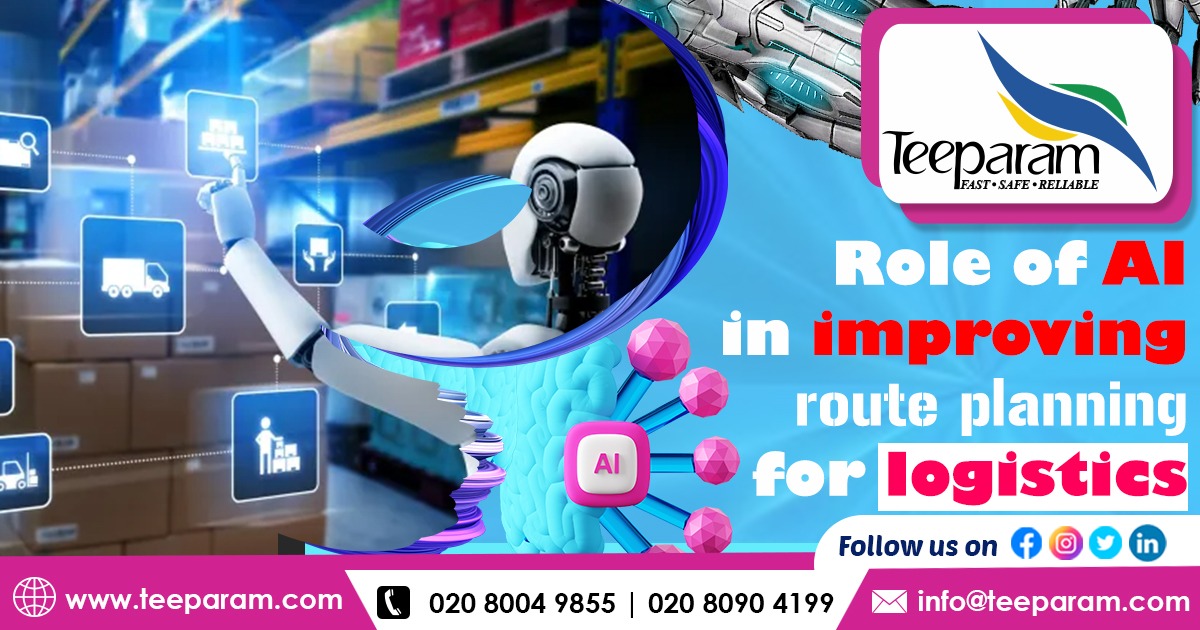
Role of AI in improving route planning for Logistics

Role of AI in improving route planning for Logistics

Effective route planning for logistics industry needs to remain competitive, as customers increasingly prefer quicker delivery options. They face challenges such as delays, high fuel costs, and customer dissatisfaction more often. Fortunately, Artificial Intelligence (AI) has the potential to transform the landscape. With the help of AI, route planning for logistics being revolutionized by making it faster, smarter, and more reliable.

By utilizing big data, machine learning, and predictive analytics, AI can help companies plan better routes, reduce delivery times, and save money. How exactly does the AI improve route planning and the many benefits it brings to logistics operations?

Why does logistics need Route Planning?

By route planning, logistics companies can determine the most efficient path for vehicles to deliver goods. It needs to take into account several factors, such as traffic conditions, delivery time windows, vehicle capacity, road restrictions, and fuel consumption.

Route planning often depends on manual input or basic software tools, which are usually time-consuming and less accurate, but AI can eliminate such issues.

How Route Planning Can Be Transformed by Using AI

  1. Automation of Route Planning

AI is capable of handling complex calculations faster than humans or simple software. Systems that use AI automate route planning by analyzing multiple factors at once—like traffic patterns, delivery priorities, weather, and vehicle load.

This makes logistics managers’ work less complicated, as they no longer need to spend hours creating delivery schedules. AI can do this within seconds, offering the most efficient routes with little to no manual work.

  1. Real-Time Traffic Analysis

This is one of the most helpful features of AI. AI accesses traffic data from GPS, sensors, and public traffic feeds and then uses this information to make the best moves for your delivery.

AI can quickly offer alternative routes if there’s an accident or heavy traffic on the planned route. This can make the deliveries fast and keep them on schedule, improving both efficiency and customer satisfaction.

  1. Delay Management through Predictive Analytics

AI is not only helpful in real-time conditions, but it can also predict future problems. AI systems are capable of predicting delays or route disruptions by using historical traffic data, weather forecasts, and delivery trends.

Logistics providers can take proactive steps to reroute vehicles, avoid slowdowns, and keep operations smooth with the help of AI.

  1. Best Route Adjustments

AI is capable of providing a secondary route instantly if a customer changes their delivery address last minute or a road suddenly becomes blocked. It provides dynamic routing while your goods are on the go.

Delivering goods can often face unexpected delays; therefore, flexibility is essential in logistics. Dynamic routing helps cut down wasted time and ensures on-time delivery.

  1. Integration with IoT and Telematics

AI can perform well when connected to IoT (Internet of Things) devices and telematics systems. Sensors connected to vehicles can collect data on engine health, speed, fuel usage, and driver behavior.

These data are then analyzed by the AI in real-time to make smart decisions on selecting the route. For example, AI can reroute a vehicle to a nearby station that is low on fuel. Likewise, if a driver is running out of working hours, AI can adjust the route to stay within legal limits.

  1. Improving Last-Mile Delivery

AI can help with the most difficult and expensive final step of the delivery process by:

  • Providing maximum efficiency to delivery sequences
  • Providing the best time for each delivery
  • Giving drivers clear instructions for multiple stops

This will not only save time and fuel but also ensure packages reach customers fast and on time.

  1. Machine Learning Aids Continuous Improvement

Machine learning over time can improve the AI systems, making them smarter. AI can learn from past deliveries and analyze what worked and what didn’t, then improve its algorithms.

The more you keep using AI for route planning, the better it becomes. As a result, your logistics operations will become more efficient and reliable over time.

What are the benefits of AI-driven route optimization?

  1. Increased efficiency in operations

AI helps to cut down travel time and speed up delivery schedules, resulting in fewer delays, fewer missed deliveries, and improved utilization of vehicles and drivers.

  1. Cost Reduction

AI can eliminate extra mileage and idle time, allowing companies to save money on fuel, vehicle maintenance, and labor. Little improvements in route planning can lead to big savings over time.

  1. Maximum utilization of resources

AI can make sure that every vehicle carries a full load and every delivery person is assigned tasks based on their location and availability. It allows logistics companies to use resources more smartly.

  1. Reduce impact on the environment

Cutting down the mileage reduces the fuel usage. This helps companies to cut down their carbon footprint and support global sustainability goals.

  1. Improved Customer Satisfaction

Customers do not complain if the deliveries are made on time, with live tracking, and with fewer mistakes. If your customers are well satisfied with your service, they will stay loyal and recommend your service to others.

  1. Scalability and Flexibility

Since the AI can adapt easily according to the demands, it will handle more deliveries without lowering the efficiency as your business grows.

  1. Better Decision-Making

Logistics managers can make better business decisions with data-driven insights provided by the AI that help with long-term planning and forecasting.

Now think of a delivery company with 50 vehicles handling hundreds of daily orders in a large city. If they run without any help from AI, the route planning may take more time, resulting in late deliveries and extra fuel costs.

On the other hand, with AI:

  • Routes will be planned in no time.
  • Vehicles can avoid traffic jams automatically.
  • Drivers can make more deliveries in less time.
  • Drop in fuel usage.
  • Can provide accurate delivery time updates to customers.

Automation, intelligence, and adaptability provided by AI are transforming route planning in the logistics industry. Options such as last-minute route changes thanks to real-time traffic analysis by AI enable logistics companies to work smarter.

Nowadays, using AI for route optimization has become a necessity to provide a better service for the growing demand for deliveries and to satisfy the rising customer expectations. Teeparam is also offering other services that includes Money transfer through which you can send money to Sri Lanka and get competitive rates.

      W W W