
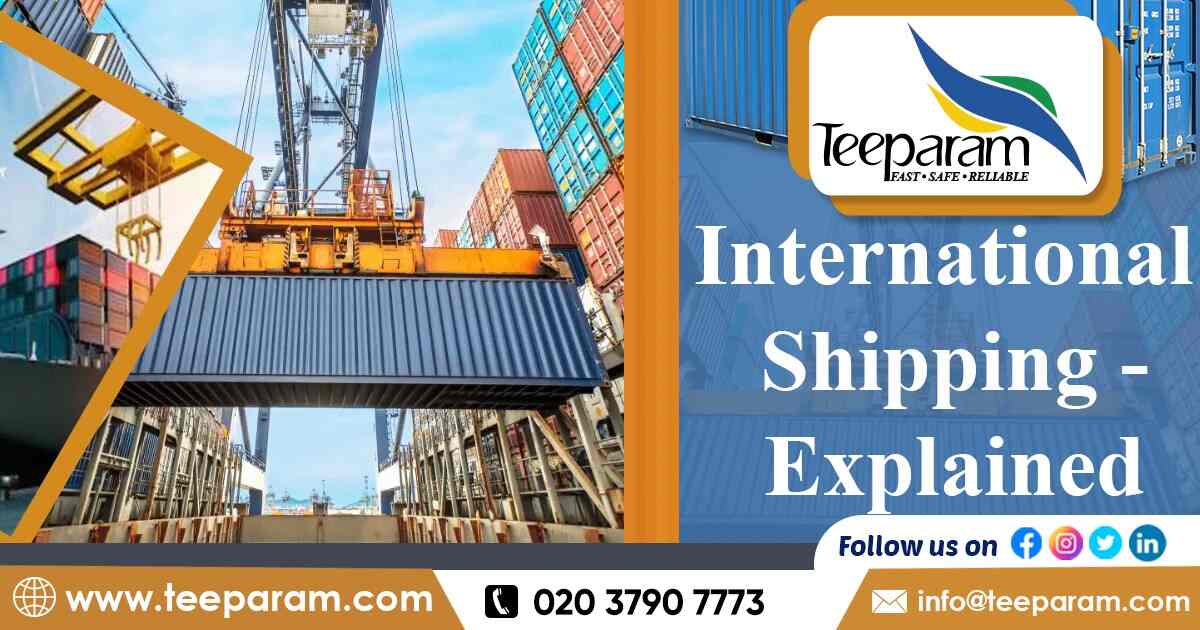
Picture this: you’re scrolling through an online shop late at night, coffee in hand, and you spot that perfect pair of boots from a little artisan in Italy. Or maybe it’s a gadget from a tech whizz in Shenzhen. One click, and boom – it’s on its way across the globe. But have you ever stopped to wonder what magic (or mayhem) happens behind the scenes to get it to your doorstep? International shipping is the unsung hero of our connected world, ferrying everything from bananas to smartphones across oceans and borders. And in 2025, with global maritime trade chugging along at a modest 0.5% growth after last year’s 2.2% uptick, it’s more vital than ever. We’re talking over 90% of world trade zipping along by sea alone, clocking in at a whopping $14 trillion annually. For us in the UK, it’s a lifeline – think of all those pints of Aussie lager or French cheeses gracing our shelves. But post-Brexit, it’s got its quirks. Whether you’re a small business owner in Manchester eyeing exports to the States or just a curious shopper in London, let’s unpack this beast in plain English. No jargon overload, promise.
The Basics: What on Earth is International Shipping?
At its heart, international shipping is simply moving goods from one country to another. It’s not just about slapping a stamp on a parcel and hoping for the best – though for small stuff, it can feel that way. We’re talking a massive operation that spans sea, air, rail, and even road for those shorter hops. Back in the day, it was all about clipper ships and horse-drawn carts; now, it’s a high-tech ballet involving containers the size of houses.
Why does it matter? Because without it, your morning avocado toast wouldn’t happen. Global trade relies on this network to keep shelves stocked and economies humming. In 2025, container volumes hit a record 16.61 million TEUs (that’s twenty-foot equivalent units, the standard measure for shipping boxes) in August alone, up 4.4% from last year. For the UK, it’s evolved since we waved goodbye to the EU in 2020. No more seamless lorry runs across the Channel without a mountain of paperwork. Instead, we’ve got new trade deals – like the one with India in May 2025, easing some tariffs – but it’s still a bit of a learning curve.
Think of it like a giant game of pass-the-parcel, but with rules set by everyone from the World Trade Organisation to your local customs office. Key players? Shippers (the folks sending stuff), carriers (the companies with the boats and planes), and freight forwarders (the middlemen who sort the logistics). And don’t forget Incoterms – those snappy acronyms like FOB (Free On Board) or CIF (Cost, Insurance and Freight) that spell out who pays what and when. They’re your best mate for avoiding arguments over who foots the bill if a storm sinks your shipment.
Modes of Transport: Pick Your Poison
So, how does the stuff actually move? You’ve got options, each with its pros, cons, and a price tag to match. Sea freight is the kingpin – slow but cheap for bulk. Massive vessels like those on the Asia-Europe route (think Suez Canal drama) haul everything in those stackable containers. It’s ideal for non-urgents: your new sofa from IKEA’s Polish factory, say. But delays? Oh, they happen. Red Sea tensions have rerouted ships around Africa, adding weeks and costs.
Air freight, on the other hand, is the Ferrari of shipping – lightning-fast but wallet-busting. Perfect for high-value or perishable goodies, like fresh salmon from Norway to Billingsgate Market. It only handles about 1% of volume but punches way above in speed: London to New York in a day. For UK exporters, Heathrow’s a hub, but fuel prices can make your eyes water.
Then there’s multimodal – a mix-and-match approach. Rail’s booming for Europe-Asia via the New Silk Road, trundling goods from Chongqing to Duisburg in under two weeks. Roads for intra-continental jaunts, like your van full of widgets from Dover to Dublin. And for the eco-conscious, intermodal (switching seamlessly between modes) cuts emissions. In 2025, with parcel volumes projected at 217 billion globally, expect more of this hybrid hustle to keep up with e-commerce booms.
Choosing? It boils down to urgency, size, and budget. Shipping a container of tees to Australia? Sea all the way. Time-sensitive tech parts? Wings it is.
How It All Works: From Click to Delivery
Alright, let’s walk through the dance. Step one: you book. Whether via a platform or a freight forwarder, you quote based on weight, dimensions, and route. Pack smart – use sturdy boxes, label clearly, and declare values honestly to dodge fines.
Next, documentation. This is where it gets fiddly. Commercial invoices, packing lists, certificates of origin – and for the UK, EORI numbers for customs. Post-Brexit, even a simple export to France needs an export declaration. Tools like HMRC’s online portal help, but stuff it up and your goods sit in limbo.
Then, the journey. Goods hit the port or airport, get loaded (often in a container for security), and off they go. Tracking apps keep you in the loop – no more staring at the door like a lost puppy. Customs clearance is the bottleneck: duties, VAT (20% in the UK), and inspections. Once cleared, last-mile delivery – that DPD van pulling up.
The whole shebang can take days (air) to months (sea). Pro tip: Use Express for valuables; Standard for bulk.
Costs: The Bitter Pill
Ah, the numbers. International shipping ain’t cheap – expect 2-5 times domestic rates thanks to distance and red tape. A 20ft container from Shanghai to Felixstowe might set you back £2,000-£5,000, per the Drewry World Container Index, hovering around $1,687 for a 40ft in October 2025.
What jacks it up? Fuel surcharges (bunker fuel’s volatile), port fees, insurance (1-2% of value), and tariffs. Brexit added a 21% dip in EU-UK cargo volumes from 2021-2024, hiking costs for cross-Channel hauls. Duties vary – zero under deals like UK-US tweaks in 2025, but up to 10% otherwise. Hidden extras? Demurrage if your container lingers too long at the port.
To trim: consolidate shipments, negotiate rates, or go green for subsidies. Tools like rate calculators demystify it.
Challenges: Bumps in the Road
It’s not all smooth seas. Customs delays – exacerbated by Brexit’s paperwork pile-up – can add weeks, hitting supply chains hard. Geopolitics? Houthi attacks reroute 12% of global trade. Environmentally, shipping guzzles 3% of the world’s oil, spewing CO2. Regulations like IMO 2020’s sulphur caps help, but enforcement is patchy.
For UK folk, the biggie is the 30% shortfall in goods exports versus pre-Brexit projections. Smaller firms struggle with compliance costs. Globally, labour shortages and port congestion (hello, Long Beach backups) keep everyone on their toes.
Tips for Would-Be Shippers
Fancy dipping in? Start small. Vet carriers via reviews. Use freight forwarders for hand-holding – they’re worth the 5-10% fee. Insure everything, track religiously, and build buffers for delays. For UK exporters, tap Gov.uk’s export academy for free webinars. And go digital.
The Future: Greener Horizons
Looking ahead, 2025’s buzzing with change. Tech’s leading: AI predicts routes, slashing fuel by 10%; blockchain zaps paperwork. Sustainability? Cleaner fuels like ammonia, electric vessels, and carbon capture are game-changers, eyeing that $10B green opportunity. Expect more autonomous ships and real-time emissions tracking by 2030. For the UK, joining global pacts could ease Brexit blues.
In the end, international shipping’s a thrilling, tricky thread in our global tapestry. It connects us, challenges us, and keeps the world turning. Next time that package pings ‘delivered’, give a nod to the invisible fleet making it possible. Safe travels – or sails, rather.
Spotlight on a Reliable Partner: Teeparam Logistics
When it comes to navigating the choppy waters of international shipping, finding a dependable partner can make all the difference – especially if you’re in the UK and eyeing routes to places like Sri Lanka or beyond. That’s where Teeparam Logistics shines. Established back in 2009 and based right here in Croydon, they’ve built a solid rep as a one-stop shop for sea, air, and land transport, with a real focus on reliable, door-to-door service that doesn’t leave you guessing.