
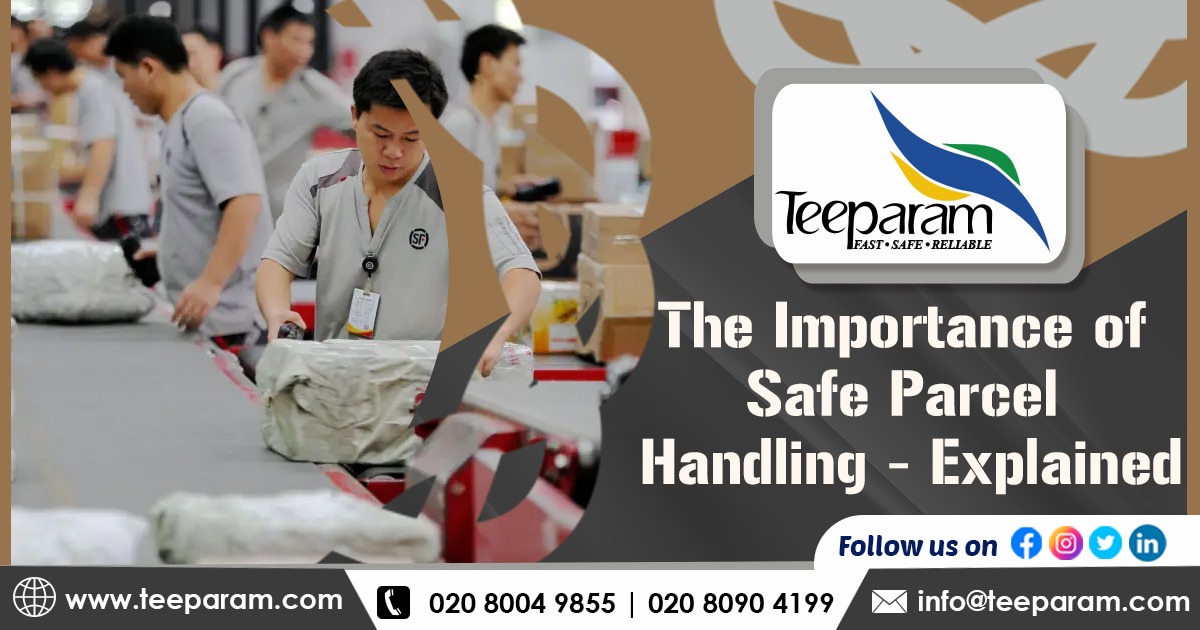
The Importance of Safe Parcel Handling – Explained
Millions of parcels travel across cities, countries, and even continents daily in today’s world. Parcel deliveries have become an essential part of modern life with the rapid rise of e-commerce and global trade. The safety of your package is important whether you are shipping products from your business to clients or an individual sending a gift to a loved one.
Safe parcel handling is not just about delivering a package on time; it’s also about ensuring the package arrives intact, meaning the contents reach their destination in perfect condition, without damage, loss, or security risks. Each stage of the logistics chain, from labeling and packaging to tracking, shipping, and last-mile delivery, is vital to the safety of packages.
Labeling and Packaging: The Primary Stage of Safety
Every shipment’s journey starts with its packaging. The key component of safe logistics is proper packaging. Even the most sophisticated logistics system cannot shield a package from possible dangers if it is not packaged securely, effectively, and with strong packaging.
Customized Packaging: Depending on its size, weight, and fragility, each item should be packed in a different style. Double boxes, cushioning, or bubble wrap are necessary to keep fragile items like electronics and glassware from breaking. Wooden crates or reinforced cartons are needed for heavy items. On the other hand, for safe handling and transportation, hazardous materials need to be packed in containers that have been specially approved.
Proper Labeling: Labels are the package’s identity card. They contain important information like the tracking number, destination address, barcodes, and handling guidelines. For instance, handlers are guided during the shipping process by labels such as “Handle with Care,” “This Side Up,” and “Fragile.”
Technology in Labeling: Thanks to advanced technology, labeling has evolved beyond printed stickers. Digital barcodes and RFID (Radio-Frequency Identification) systems are now commonly utilized by logistics companies to track packages accurately, guaranteeing that each package travels through the supply chain transparently and with minimal errors.
Tracking Systems: Make things easy for both Senders and Receivers
Tracking technology has revolutionized logistics in the digital age. Consumers no longer have to wonder about the whereabouts or expected arrival time of their packages. Now they are informed at every stage through real-time updates.
GPS and Real-Time Updates: Both senders and recipients can view the exact location of their package at any time thanks to modern tracking systems. In addition to enhancing trust, this guarantees a quick response in case of an emergency.
Geofencing Technology: To establish virtual boundaries, certain logistics companies employ geofencing technology. Both the supplier and the customer receive alerts right away if a package leaves the specified delivery area. This enhances security against theft and delivery mistakes.
Security for High-Value Items: Advanced tracking provides peace of mind for highly valuable goods like jewelry, private papers, or medical supplies. These packages are far less likely to be lost or damaged with thanks to continuous tracking.
Transportation and Handling: Guaranteeing Safety in Motion
A package enters the transportation stage once it has been packaged and labeled. Multiple transfers from warehouses to trucks, ships, or airplanes are part of this stage. Safe handling and transportation practices are essential because packages are continuously on the move.
Trained Employees: Logistics firms invest largely in employee training. Handlers are trained to handle packages of various shapes, sizes, and fragilities. Packages that are sensitive or valuable and need extra care are given special attention.
Secured Vehicles: Security features like CCTV cameras, GPS units, and alarm systems are installed in certain vehicles. Some companies even use armored or closely watched vehicles for valuable deliveries.
Strict Protocols: Logistics providers follow strict operational protocols to reduce risks. Certain packages might be moved under continual observation, sealed for added security, and kept in safe containers.
Verified Drivers and Employees: Reliable delivery workers are essential to safe handling. To guarantee reliability and accountability, many businesses perform background checks on both contractors and employees.
Last-Mile Delivery: Successful Completion of the Safety Cycle
“Last-mile delivery” is the final phase of a package’s journey. At this point, the package leaves the local distribution center and is delivered to the customer’s home. This stage may be the most vulnerable, even though it seems simple.
Notifications of Delivery: When a package is ready for delivery, many logistics companies notify their clients via email or SMS. This lowers the risk of doorstep theft by ensuring the recipient is available to accept the package.
Secure Lockers and Pickup Locations: Businesses provide alternate delivery options as a solution for the growing problem of stolen packages. Customers can pick up packages whenever it’s convenient for them in a secure location, thanks to authorized pickup locations and secure lockers.
Verification on Delivery: Customers may be required to present identification or a digital code to receive high-value items. This lowers fraud and guarantees that the right person receives the package.
Why It’s Important to Handle Parcels Safely
Safe parcel handling is more than just a logistics practice; it is a core element of customer, logistics provider, and business trust. Here’s why it’s so crucial:
Customer satisfaction: Lost or damaged packages may ruin a company’s reputation and decrease customer trust. Safe handling increases customer loyalty and guarantees their satisfaction.
E-commerce Growth: Secure logistics make sure that companies can meet demand without sacrificing quality, as millions of packages are shipped every day as a result of online shopping.
Risk management: During transit, packages are subject to various risks, ranging from weather-related damage to theft. Secure handling reduces these dangers and safeguards the sender and the recipient.
Global Trade Support: Tighter rules are imposed for packaging, labeling, and shipping in international logistics to ensure safer parcel handling.
Safe parcel handling is essential, in the rapidly growing world of international trade and e-commerce. Every stage, from accurate labeling and effective packaging to real-time tracking, safe transportation, and last-mile delivery, is important to protect packages from possible threats.
Businesses that prioritize secure handling increase trust, create lasting relationships, and guarantee that every package—no matter how big or small—arrives at its destination safely. The unseen basis in modern logistics is safe parcel handling, which provides senders and recipients with the assurance that their packages are in safe hands from the very beginning to the end.