When to Courier Luggage Ahead of Your Trip to India or Sri Lanka

When to Courier Luggage Ahead of Your Trip to India or Sri Lanka

A trip to Sri Lanka or India can be exciting and thrilling. Whether you’re traveling for business, to visit family, or as a tourist, planning your trip involves more than just making travel and lodging arrangements. Sending your parcels to Sri Lanka in advance is one of the best travel choices you can make.

By having your bags couriered before you leave, you can avoid airport stress, pay less for extra baggage, and have a more enjoyable trip overall. However, when is the best time to do it? When organizing a luggage courier to India or Sri Lanka, timing is crucial.

Why Send Your Luggage by Courier Before Your Trip?

Many passengers don’t realize how much simpler it is to send their bags ahead of time. Here are some explanations:

Avoid paying for checked baggage on airlines: Excess or oversized baggage causes high fees from airlines. A courier service often offers a more fixed and affordable price.

Travel light: It is much more comfortable to move through airports and transfers with little to no luggage.

Door-to-door convenience: In India or Sri Lanka, your belongings can be picked up from your house and delivered straight to your hotel or home.

No hassle with airport customs: By taking care of customs paperwork beforehand, your courier provider lowers the possibility of being delayed when you arrive.

Ideal for extended stays or relocations: Sending your luggage by courier guarantees that all of your belongings will arrive safely if you’re moving or spending several months overseas.

When Is the Best Time to Ship Your Baggage?

Your destination, the courier route, and the kind of goods you’re sending are all impacting the ideal time to courier your luggage. The general schedules and instructions for shipping luggage to India or Sri Lanka are listed below.

Courier Ten to Fourteen Days Before Your Trip

It is best to send your luggage 10 to 14 days before your flight for the majority of standard courier services. This window provides enough time for:

Transportation and pickup: Depending on the route and customs processing times, international shipments may take five to ten working days.

Customs clearance: It could take a few more days for packages to be inspected and verified.

Unexpected delays: Shipments may occasionally be delayed by public holidays, weather-related cancellations, or flight rescheduling.

Send Even Earlier During the Peak Travel Seasons

Travel to India and Sri Lanka is particularly popular during festivals, summer vacations, and the December–January travel season. During these months, courier services and customs offices may see a surge in shipments.

If you are traveling during the holidays and New Year’s season in December or January, send your luggage at least three weeks before departure to avoid delays.

April: Several regional celebrations in India, as well as the Sinhala and Tamil New Years in Sri Lanka.

July–August: Travel during the monsoon and school holidays.

October–November: India’s cultural holidays, including Diwali and Navaratri.

In addition to guaranteeing on-time delivery, scheduling your shipment in advance may enable you to lock in cheaper prices before demand rises.

  1. Send a month in advance if you’re moving or studying overseas.

Sending larger shipments at least one month before the date of your planned move is the best option for students, expatriates, or long-term visitors moving to India or Sri Lanka.

Books, household goods, and personal belongings that need extra paperwork are frequently included in moving packages. Clearance through customs for personal effects may take longer, particularly if you’re shipping larger or more expensive items.

You can make sure that your necessities are ready for you when you get there by shipping your items ahead of time

Important Actions to Take Before Shipping Your Baggage

There is some preparation and paperwork involved in sending luggage abroad. Here is a quick checklist to get you ready:

  1. Check out the regulations for customs

Sri Lanka and India both have particular import regulations. Electronics, new goods, and large quantities of similar items may be subject to taxes, but personal clothing and necessities for travel are usually duty-free. Before shipping your bags:

  • Don’t pack brand-new items with their tags still on them
  • Make a clear declaration of all valuable items.
  • Save your receipts for expensive gifts or electronics in case customs asks for evidence of value.

A professional courier service can walk you through the customs paperwork process and explain what is permitted.

  1. Label Clearly and Pack Smartly

To keep your belongings safe during lengthy transit, use sturdy suitcases or double-layered boxes. Use clothing for cushioning or bubble wrap to secure each item.

Put the following label on each bag or box:

  • Your full name
  • Address of destination (including local phone number)
  • Address for return

If necessary, include a packing list with every shipment to help in customs inspection.

  1. Select the suitable Courier Service

Choose a courier service that:

  • Provides door-to-door delivery
  • Possesses experience in the delivery of international luggage
  • Offers options for tracking and insurance.
  • Provides clear delivery dates.
  1. Track Your Package

After your shipment is shipped, the majority of courier services provide real-time tracking links. To track the progress of your package, pay attention to the tracking updates. Get in touch with your courier service right away if you see any delays or “customs hold” notifications; they can work with customs officials to quickly fix the problem.

Sending Luggage with Teeparam

Teeparam Logistics offers worldwide parcel services for your luggage courier needs if you’re based in the UK and are organizing a trip to India or Sri Lanka. They have well-established offices in both nations and are experts in:

  • International luggage delivery
  • Help with customs documentation
  • Reasonably priced shipping
  • Real-time monitoring and customer service

Whether you’re visiting family or moving permanently, their network ensures trouble-free deliveries in major cities like London, Birmingham, Chennai, Mumbai, Colombo, and Jaffna.

When it comes to sending your belongings before your trip to India or Sri Lanka, timing is crucial. You can make your trip easier, lighter, and less stressful with careful planning, packing, and a reliable logistics partner like Teeparam.

The next time you’re planning a trip, consider more than just your airline ticket and start packing your bags early.

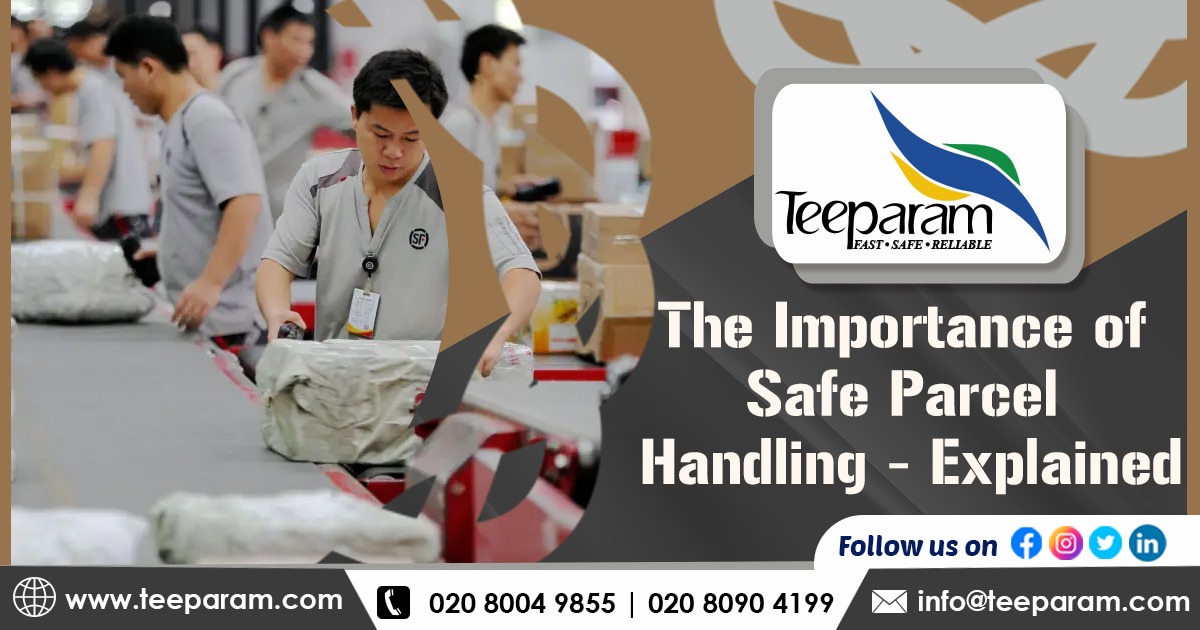
The Importance of Safe Parcel Handling – Explained

The Importance of Safe Parcel Handling – Explained

Millions of parcels travel across cities, countries, and even continents daily in today’s world. Parcel deliveries have become an essential part of modern life with the rapid rise of e-commerce and global trade. The safety of your package is important whether you are shipping products from your business to clients or an individual sending a gift to a loved one.

Safe parcel handling is not just about delivering a package on time; it’s also about ensuring the package arrives intact, meaning the contents reach their destination in perfect condition, without damage, loss, or security risks. Each stage of the logistics chain, from labeling and packaging to tracking, shipping, and last-mile delivery, is vital to the safety of packages.

Labeling and Packaging: The Primary Stage of Safety

Every shipment’s journey starts with its packaging. The key component of safe logistics is proper packaging. Even the most sophisticated logistics system cannot shield a package from possible dangers if it is not packaged securely, effectively, and with strong packaging.

Customized Packaging: Depending on its size, weight, and fragility, each item should be packed in a different style. Double boxes, cushioning, or bubble wrap are necessary to keep fragile items like electronics and glassware from breaking. Wooden crates or reinforced cartons are needed for heavy items. On the other hand, for safe handling and transportation, hazardous materials need to be packed in containers that have been specially approved.

Proper Labeling: Labels are the package’s identity card. They contain important information like the tracking number, destination address, barcodes, and handling guidelines. For instance, handlers are guided during the shipping process by labels such as “Handle with Care,” “This Side Up,” and “Fragile.”

Technology in Labeling: Thanks to advanced technology, labeling has evolved beyond printed stickers. Digital barcodes and RFID (Radio-Frequency Identification) systems are now commonly utilized by logistics companies to track packages accurately, guaranteeing that each package travels through the supply chain transparently and with minimal errors.

Tracking Systems: Make things easy for both Senders and Receivers

Tracking technology has revolutionized logistics in the digital age. Consumers no longer have to wonder about the whereabouts or expected arrival time of their packages. Now they are informed at every stage through real-time updates.

GPS and Real-Time Updates: Both senders and recipients can view the exact location of their package at any time thanks to modern tracking systems. In addition to enhancing trust, this guarantees a quick response in case of an emergency.

Geofencing Technology: To establish virtual boundaries, certain logistics companies employ geofencing technology. Both the supplier and the customer receive alerts right away if a package leaves the specified delivery area. This enhances security against theft and delivery mistakes.

Security for High-Value Items: Advanced tracking provides peace of mind for highly valuable goods like jewelry, private papers, or medical supplies. These packages are far less likely to be lost or damaged with thanks to continuous tracking.

Transportation and Handling: Guaranteeing Safety in Motion

A package enters the transportation stage once it has been packaged and labeled. Multiple transfers from warehouses to trucks, ships, or airplanes are part of this stage. Safe handling and transportation practices are essential because packages are continuously on the move.

Trained Employees: Logistics firms invest largely in employee training. Handlers are trained to handle packages of various shapes, sizes, and fragilities. Packages that are sensitive or valuable and need extra care are given special attention.

Secured Vehicles: Security features like CCTV cameras, GPS units, and alarm systems are installed in certain vehicles. Some companies even use armored or closely watched vehicles for valuable deliveries.

Strict Protocols: Logistics providers follow strict operational protocols to reduce risks. Certain packages might be moved under continual observation, sealed for added security, and kept in safe containers.

Verified Drivers and Employees: Reliable delivery workers are essential to safe handling. To guarantee reliability and accountability, many businesses perform background checks on both contractors and employees.

Last-Mile Delivery: Successful Completion of the Safety Cycle

“Last-mile delivery” is the final phase of a package’s journey. At this point, the package leaves the local distribution center and is delivered to the customer’s home. This stage may be the most vulnerable, even though it seems simple.

Notifications of Delivery: When a package is ready for delivery, many logistics companies notify their clients via email or SMS. This lowers the risk of doorstep theft by ensuring the recipient is available to accept the package.

Secure Lockers and Pickup Locations: Businesses provide alternate delivery options as a solution for the growing problem of stolen packages. Customers can pick up packages whenever it’s convenient for them in a secure location, thanks to authorized pickup locations and secure lockers.

Verification on Delivery: Customers may be required to present identification or a digital code to receive high-value items. This lowers fraud and guarantees that the right person receives the package.

Why It’s Important to Handle Parcels Safely

Safe parcel handling is more than just a logistics practice; it is a core element of customer, logistics provider, and business trust. Here’s why it’s so crucial:

Customer satisfaction: Lost or damaged packages may ruin a company’s reputation and decrease customer trust. Safe handling increases customer loyalty and guarantees their satisfaction.

E-commerce Growth: Secure logistics make sure that companies can meet demand without sacrificing quality, as millions of packages are shipped every day as a result of online shopping.

Risk management: During transit, packages are subject to various risks, ranging from weather-related damage to theft. Secure handling reduces these dangers and safeguards the sender and the recipient.

Global Trade Support: Tighter rules are imposed for packaging, labeling, and shipping in international logistics to ensure safer parcel handling.

Safe parcel handling is essential, in the rapidly growing world of international trade and e-commerce. Every stage, from accurate labeling and effective packaging to real-time tracking, safe transportation, and last-mile delivery, is important to protect packages from possible threats.

Businesses that prioritize secure handling increase trust, create lasting relationships, and guarantee that every package—no matter how big or small—arrives at its destination safely. The unseen basis in modern logistics is safe parcel handling, which provides senders and recipients with the assurance that their packages are in safe hands from the very beginning to the end.

Should You Use Incognito Mode When Booking Flights

Should You Use Incognito Mode When Booking Flights

Picture this: You’re sitting in your Mumbai apartment, dreaming of a trip to New York City. You’ve got your laptop open, scrolling through flight options on popular air ticketing agencies. The prices look decent at first—maybe around ₹60,000 for a round-trip. But then you refresh the page a few hours later, and bam, it’s jumped to ₹75,000. Frustrated, you remember that old tip from a friend: “Just switch to incognito mode, yaar. It’ll trick the airlines into giving you cheaper fares.” Sounds like a clever hack, right? But is it really worth the effort, especially for those long-haul flights from India to the USA?

In the world of travel hacks, few myths have stuck around as stubbornly as the idea that browsing in private or incognito mode can snag you better deals on air tickets. With India-to-USA flights being some of the most expensive international routes—often costing between ₹50,000 to ₹1,50,000 depending on the season—every rupee saved counts. But let’s examine deeper into whether this trick actually works, or if it’s just another urban legend in the age of dynamic pricing. I’ll break it down step by step, drawing from expert insights, studies, and real-world experiences to help you decide.

What Exactly Is Incognito Mode, and Why Do People Think It Helps?

First things first, incognito mode—also known as private browsing—is a feature in browsers like Google Chrome or Firefox that lets you surf the web without saving your history, cookies, or site data. When you close the window, poof, it’s like you were never there. No cached searches, no targeted ads following you around (at least, not as aggressively).

The theory behind using it for flight bookings goes like this: Airlines and booking sites use cookies—those tiny bits of data stored on your device—to track your searches. If they see you’ve been eyeing the same Delhi-to-Chicago flight multiple times, they might hike the price to create a sense of urgency. “Buy now before it’s gone!” Switch to incognito, and you’re starting fresh, supposedly fooling the system into showing lower fares.

This idea gained traction back in the early 2010s, when dynamic pricing was becoming more sophisticated. Forums like Reddit buzzed with anecdotes: “I saved $200 on my ticket by going incognito!” one user claimed in a 2016 thread. It made sense intuitively—after all, we’ve all felt like Big Brother is watching our online shopping habits. But as technology evolved, so did the truth behind this hack.

The Reality of Flight Pricing: It’s Not About Your Cookies

To understand if incognito mode makes a difference, we need to peel back the layers of how flight prices actually work, especially on routes from India to the USA. Airlines like Air India, United, Emirates, and Delta don’t set fares in stone; they use something called dynamic pricing. This is a fancy way of saying prices fluctuate in real-time based on a bunch of factors: demand, supply, fuel costs, competition, and even the time of day.

For India-USA flights, dynamic pricing is particularly aggressive because these are high-demand routes. Think about it—millions of Indians travel to the US every year for work, studies, family visits, or tourism. Peak seasons like summer vacations (June-August) or festival times (Diwali or Christmas) see prices skyrocket. A report from FlyDealFare explains that carriers adjust fares based on real-time data, not just your individual search history. For instance, if a bunch of seats sell out quickly due to a corporate event in Silicon Valley, prices go up for everyone, regardless of whether you’re incognito or not.

Experts from sites are blunt about it: “Searching for flights incognito does nothing. Absolutely nothing.” Why? Because modern pricing algorithms rely on broader market data, not cookies from your browser. Airlines use revenue management systems that predict demand using historical trends, weather forecasts, and global events. Your repeated searches might correlate with price changes, but they’re not the cause—it’s just coincidence or overall demand spiking.

Take a real example from recent discussions. In a Reddit thread about flight ticket prices in India, users noted spikes during events like the Aero Show, where operations halt temporarily, driving up demand and prices across the board. No amount of incognito browsing would dodge that.

Evidence: Does Incognito Mode Actually Save Money?

Now, let’s look at the data. A 2024 study by Quartz tested this myth by comparing flight prices in regular and incognito modes over hundreds of searches. The results? Incognito mode showed cheaper flights only about 7% of the time, but more expensive ones 5% of the time. In a whopping 88% of cases, prices were identical. That’s hardly a game-changer.

Travel experts echo this. VERIFY, a fact-checking site, consulted pros from NerdWallet and Going (formerly Scott’s Cheap Flights), who found no evidence that incognito or clearing cookies lowers prices.  Gizmodo went further, explaining why the myth persists: People see price changes and attribute them to their browsing habits, ignoring the bigger picture of market dynamics.

On X (formerly Twitter), opinions are split. Some users swear by it: “Book flights in incognito mode to avoid price hikes,” posted one travel tip account in March 2025. But others debunk it outright: “Flights are not cheaper in incognito mode,” tweeted a user in February 2025. A post from Airline Hub highlighted how search habits don’t lead to the privacy or savings people expect.

For India-USA specifically, a blog from MyTicketsToIndia notes that while many believe incognito hides you from dynamic pricing, it’s not the best strategy. Prices here are influenced more by oil prices, taxes, and bilateral agreements between countries than by your browser settings. A YouTube video from KHOU in 2024 reinforces that airlines don’t raise prices based on search behavior.

That said, there might be rare scenarios where incognito helps. If a booking site (not the airline) uses cookies for personalized pricing—say, showing higher rates to returning visitors—it could make a small difference. But even then, it’s marginal, and VPNs or different devices might be more effective.

Better Ways to Score Cheap Flights from India to the USA

If incognito isn’t the silver bullet, what is? Here are some proven strategies that can actually shave hundreds off your ticket:

Book at the Right Time

For international flights like India-USA, aim for 6-8 weeks in advance. A Skyscanner analysis shows prices drop when demand is low or during flash sales. Avoid booking on weekends; Tuesdays and Wednesdays often have lower fares.

Be Flexible

Fly midweek or from alternative airports. Instead of Mumbai to New York, try Ahmedabad to Chicago via a Middle Eastern hub like Dubai. Tools like Google Flights can help compare.

Set Up Alerts:

Use apps like Hopper or Google Flights to track prices. They’ll notify you when fares dip. For India-USA, watch for deals from carriers like Qatar Airways or Etihad, which often undercut direct flights.

Clear Cookies or Use VPNs

If you’re paranoid about tracking, a VPN changing your IP to another country (like the US) might show different prices, as fares can vary by location. But again, this isn’t foolproof.

Look for Bundles and Sales

Check airline websites directly—Air India often has promo codes for NRIs. Sites like Zolve offer guides on finding deals, emphasizing flexibility over hacks.

A LinkedIn post from an Indian traveler ranted about dynamic pricing jumping from ₹9,500 to ₹12,500 mid-booking, blaming algorithms—not cookies. The key is patience and comparison.

The Verdict: Skip the Incognito Drama?

So, should you bother with incognito mode for your next India-to-USA flight? Probably not as your main strategy. The evidence overwhelmingly points to it being a myth, perpetuated by confirmation bias rather than hard facts. While it won’t hurt to try—it’s free and quick—the real savings come from understanding dynamic pricing and using smarter tools. If you are a student, you can get student discount from emirates airlines, to avail it. Read our blog on How to Get Emirates Airways Student Discount Plane Tickets

That doesn’t mean you should ignore privacy altogether. In an era where data is king, clearing your cache or using incognito can give you peace of mind. But for actual bargains, focus on timing, flexibility, and alerts. Next time you’re booking that flight to LA or Boston, remember: The airlines aren’t out to get you personally; they’re just playing the market game.

In the end, travel is about the journey, not the hassle of booking. Save your energy for packing and exploring, not browser tricks. Safe travels!

Unlock Stress-Free Travel with Teeparam Travels

When booking flights from India to the USA, you want a seamless experience that saves time, money, and hassle. Teeparam Travels delivers just that. Their innovative booking tool makes finding affordable fares a breeze, whether you’re planning a family vacation, a business trip, or a last-minute getaway. With affiliations to top airlines and a knack for securing incredible deals, Teeparam ensures you get the best prices without the stress. Plus, their personalized services—like arranging private guides or airport transfers—make your journey as smooth as the skies. For a hassle-free booking experience, trust Teeparam Travels to take you from India to the USA with ease and savings! Apart from booking flights, you can also send money online through Teeparam exchange platform. Teeparam offers competitive exchange rates while you send money to Sri Lanka from UK.

The Freight Forwarding Process – Explained

The Freight Forwarding Process – Explained

Have you ever wondered how that shiny new gadget from halfway across the world ends up on your doorstep? Or how businesses keep their supply chains humming without getting bogged down in a mess of paperwork and shipping woes? That’s where freight forwarding comes in. It’s like the unsung hero of global trade, the behind-the-scenes wizard that makes sure goods move from point A to point B smoothly and efficiently. In this article, I’ll break down the freight forwarding process step by step, drawing from real-world examples and insights I’ve gathered over the years. We’ll aim to keep it straightforward, no jargon overload, but detailed enough to give you a solid grasp. By the end, you’ll see why freight forwarders are indispensable in today’s interconnected economy.

So, what’s freight forwarding?

Picture a logistics maestro who doesn’t own ships, planes, or lorries but orchestrates their use to move goods efficiently. Freight forwarders are the middlemen – or rather, the experts – who handle the complexities of shipping for UK importers and exporters. They deal with carriers, customs, and paperwork, so you don’t have to. With the UK’s trade heavily tied to global markets (think £650 billion in exports annually, per 2024 stats), freight forwarders are critical. Post-Brexit, their role has only grown as businesses navigate new EU trade rules. Whether it’s getting Scottish whisky to Japan or importing car parts to Birmingham, forwarders make it happen.

Why use one?

International shipping is a minefield of customs forms, tariffs, and transport logistics. A good forwarder saves time, cuts costs, and prevents headaches. For example, during the 2021 HGV driver shortage in the UK, forwarders found workarounds like rail freight to keep goods moving. Without them, shelves would’ve been emptier than a pub at closing time.

Let’s break down the process. It’s not one-size-fits-all – it depends on what you’re shipping, where to, and how fast you need it. But here’s the typical flow, with a UK lens and some tips to avoid pitfalls.

S tep 1: Consultation and Quotation

It all starts with a conversation. You, the shipper (maybe a Leeds manufacturer or a London retailer), contact a freight forwarder with the details: What’s the cargo? How much? Where’s it going? Any special needs, like refrigeration for Cornish cheese or hazardous goods compliance for chemicals?

The forwarder maps out the best route and transport mode. Air freight is quick but costly – great for high-value items like tech gadgets. Sea freight, via ports like Felixstowe, is cheaper for bulk goods like furniture but takes weeks. For EU shipments, road freight via the Channel Tunnel is common, though Brexit checks can slow things down. They might propose multimodal transport, mixing lorry, ship, and rail for cost-efficiency.

Then comes the quote, covering transport, customs duties, insurance, and fees. A tip: Always compare quotes from multiple forwarders. Watch for hidden costs like “port congestion charges,” which spiked during the 2021 supply chain crunch. A sharp forwarder will build in buffers for delays, especially at busy ports like Dover.

Once you agree, you sign a contract, often a bill of lading (B/L) for sea or an air waybill for flights. This acts as a receipt and proof of ownership.

Step 2: Booking and Documentation

With the deal set, the forwarder books space with carriers – no small feat during peak times like Christmas, when ships and planes are packed. They secure container space at Southampton or a cargo hold at Heathrow.

Now, the paperwork. It’s the bane of shipping but vital. Key documents include:

  • Commercial Invoice: Shows the transaction value for customs.
  • Packing List: Details what’s in the shipment.
  • Certificate of Origin: Proves where goods were made, critical for UK-EU trade post-Brexit to determine tariffs.
  • Export/Import Declarations: Required for customs compliance.

For UK exporters, the forwarder files through HMRC’s Customs Handling of Import and Export Freight (CHIEF) system or its successor, the Customs Declaration Service (CDS). Errors here can lead to delays or fines. Take the 2021 case of a UK clothing brand whose EU shipments were held up over incorrect EORI numbers (Economic Operators Registration and Identification). Forwarders prevent such cock-ups.

They also arrange cargo insurance, covering loss or damage – a must, given the North Sea’s stormy moods.

Step 3: Pickup and Origin Handling

The forwarder arranges pickup from your location – say, a warehouse in Birmingham or a farm in Norfolk. This might involve a lorry to a port like Liverpool or an airport like Gatwick.

At the port, cargo is processed. For less-than-container-load (LCL) shipments, your goods share container space to save costs. Full-container-load (FCL) shipments are sealed and loaded directly. For air freight, security checks under the UK’s Known Consignor scheme ensure compliance to avoid delays.

Step 4: Transportation

Now the goods hit the road, sea, or sky:

  • Sea Freight: Containers sail from ports like Felixstowe, the UK’s busiest. Asia to the UK takes 4-6 weeks. Forwarders track via GPS and update ETAs.
  • Air Freight: Faster, often 1-5 days, ideal for urgent items like medical supplies. Heathrow handles much of this.
  • Road Freight: Common for EU deliveries via Eurotunnel or ferries. Post-Brexit, expect extra checks at Calais.

Forwarders monitor for hiccups – storms, strikes, or port backlogs. Remember the 2021 Dover chaos when Brexit rules caused lorry queues stretching for miles? Forwarders rerouted via alternative ports like Harwich.

Step 5: Customs Clearance

Customs is where many shipments stumble. At the destination, the forwarder acts as your customs broker, submitting paperwork and paying duties. In the UK, they navigate HMRC’s rules; for EU destinations, they tackle post-Brexit requirements like the EU’s Import Control System (ICS2).

Correct classification of goods (using HS codes) is key to avoiding high tariffs. Inspections may happen, especially for food or restricted items. Once cleared, the cargo is released.

Step 6: Delivery and Final Handling

The last leg – or “final mile” – involves transport from port to destination, like a shop in Cardiff or a warehouse in Glasgow. The forwarder handles drayage (port-to-door transport), unloading, and, for LCL, deconsolidation.

Proof of delivery is issued, and you’re done. Forwarders may also manage claims if goods arrive damaged – a lifesaver if a container takes a tumble.

Challenges for UK Shippers

Freight forwarding isn’t all smooth sailing. Key issues include:

  • Brexit Complexity: New customs rules mean more paperwork. Forwarders help with EORI registration and Rules of Origin compliance.
  • Port Congestion: Dover and Felixstowe often face delays. Experienced forwarders use smaller ports like Immingham as backups.
  • Driver Shortages: The UK’s HGV crisis lingers, pushing up road freight costs.
  • Sustainability: With the UK aiming for net-zero, forwarders offer greener options like rail or low-emission ships.

Pick a forwarder with UK expertise and tech tools like real-time tracking to stay ahead.

Technology’s Role

Tech is transforming forwarding. Platforms like Freightos let UK businesses compare quotes online. IoT sensors monitor cargo conditions – vital for perishable exports like Scottish salmon. Blockchain ensures transparent documentation, reducing fraud.

Still, the human touch matters. A forwarder who knows UK ports and EU regulations can save the day when a shipment hits a snag.

Why It Matters to the UK

From small Etsy sellers in Bristol to giants like Rolls-Royce, freight forwarding keeps the UK connected. With exports to the EU alone worth £340 billion in 2024, and e-commerce booming, forwarders are busier than ever.

Looking ahead, as global trade grows and sustainability pressures mount, forwarders who embrace tech and green solutions will lead the pack. For UK businesses, a reliable forwarder is like a good cuppa – essential to keep things moving.

In short, freight forwarding is a complex dance of logistics, paperwork, and problem-solving, but with the right partner, it’s a breeze. Whether you’re shipping Welsh wool or importing Spanish olives, a forwarder makes it happen.

Trusted Partner for Seamless Sea Freight from the UK

If you’re a UK business looking to ship goods to India or beyond, Teeparam Logistics is a standout choice for reliable sea freight services. Based on their offerings at Teeparam Sea Freight, they excel in simplifying the freight forwarding process with tailored solutions like Full Container Load (FCL), Less-than-Container Load (LCL), and Conventional Load for oversized cargo. Their focus on cost-effective, secure, and timely delivery, backed by real-time tracking and 24/7 support, makes them a trusted partner for navigating the complexities of international shipping. Whether you’re sending small consignments or heavy machinery, Teeparam’s customer-centric approach and global network ensure your cargo arrives safely and on schedule.

How to Ship Industrial Equipment from the UK to Sri Lanka?

How to Ship Industrial Equipment from the UK to Sri Lanka?

Are you planning to ship some industrial equipment to Sri Lanka?  If you are planning to start a new venture in Sri Lanka or expand your industrial equipment business overseas, it is no small task. It is a process that requires careful planning, specialist handling, and the right shipping partner to send packages from UK to Sri Lanka. For a smooth and cost-effective delivery, everything matters, from selecting the right transport method to protecting your cargo against the elements.

Let’s examine every step involved in shipping industrial equipment from the UK to Sri Lanka.

1. Select the Right Shipping Method

There are two common shipping options for transporting large industrial equipment overseas.Roll-on/Roll-off (Ro-Ro) or container shipping.

  • Roll-on/Roll-off (Ro-Ro)
    This option allows driveable machinery to be rolled onto the vessel and secured for transport. It is often more affordable, but it is suitable only for equipment with wheels or tracks that can move independently.
  • Container Shipping
    For non-driveable equipment or machinery that requires additional protection, container shipping is often the better choice. Options include:

    • Standard closed containers for smaller equipment.
    • Open-top containers for items that are too tall for standard containers.
    • Flat-rack containers for oversized or irregularly shaped machinery.

An experienced shipping company can help you determine which method best suits your equipment, taking into account its size, weight, and mobility. 

2. Loading the Machinery

This is the most critical stage of the process. You may require specialized loading equipment, such as forklifts, cranes, or tow trucks, to do the job. But if your equipment is drivable, you can load it straightaway to the vessel or into a container by using a ramp. If not, you may need lifting equipment. Some ports offer loading services; otherwise, you can arrange it through your shipping agent.

It is important to check whether the equipment is well-balanced and positioned when loading to avoid any movement during transit, which may result in damage.

3. Suitable Packaging

You may use a container, Ro-Ro, or flat rack for your equipment, but make sure to secure it to prevent damage during the journey. When a container is not fully loaded, items can move and cause dents, scratches, or more serious damage.

Below are a few ways to secure your equipment:

  • Filling empty spaces with timber blocks or padding.
  • Use heavy-duty straps and chains to lock the equipment in place.
  • Consider professional packing services, especially for high-value machinery.

If you need to protect your shipment professionally, some companies offer pre-shipment preparation at warehouses near the port.

4. Protecting Against Weather and Salt Exposure

Sea cargo can be exposed to harsh marine conditions, salt spray, moisture, and humidity.  In general, industrial machinery is built to withstand outdoor environments. However, sensitive parts such as electronics or control panels may require extra protection.

Here are some methods to avoid such damage.

  • Shrink wrapping – this will act as a shield to the entire machine, protecting it from salt water and dust.
  • Using desiccants inside the wrapping to absorb moisture.
  • Applying protective coatings to exposed metal parts to prevent corrosion.

5. Cost Cutting

Shipping industrial equipment from UK to Sri Lanka, especially the extra-large and heavy ones, can be very costly. Here are ways to reduce costs:

  • Disassemble the equipment if possible. Removing attachments or accessories may allow the main components to fit into standard containers.
  • Maximise container space by packing efficiently. A fully loaded container means fewer containers are needed.
  • Plan for sea transport over road transport whenever possible, because sea freight rates are usually lower.
  • Book in advance to take advantage of lower rates and better scheduling options.

6. Documentation and Compliance

Ensure that you meet the regulations of both the UK and Sri Lanka. Check that your equipment matches local safety and import standards.

Key  points to consider:

  • For certain types of machinery, compliance certification may be required.
  • Required documents might include proof of ownership, purchase invoices, and export/import declarations.
  • Customs clearance in Sri Lanka requires proper product classification and valuation.

7. Customs Duties and Tariffs

Remember, customs duties and import tariffs can affect the total cost of shipping your equipment. These costs can depend on:

  • The type of equipment.
  • The value of the shipment.
  • The specific import regulations in Sri Lanka.

Do your research on these fees ahead so that you can budget accordingly. Shipping companies may not set these charges, but they can guide you or connect you with customs brokers who can help.

8. Careful Timing

Shipping schedules often vary when it comes to international shipping. Delays can occur due to port congestion, weather, or customs inspections. If your equipment has a specific date to arrive in Sri Lanka, plan well ahead.

A few tips for timing your shipment:

  • Book a few months in advance for more predictable delivery windows.
  • Avoid peak shipping seasons to avoid high rates and delays.
  • To reduce the cost, try shipping multiple pieces of equipment together for potential cost discounts.

9. Insurance

Industrial equipment is costly, so insurance is essential. Even though shipping companies carry some liability, it may not cover the full value of your equipment — especially in cases of theft, severe damage, or loss at sea.

Consider the following when selecting insurance:

  • Pick a comprehensive coverage that reflects the true value of your cargo.
  • Compare quotes from multiple insurers.
  • Ask your shipping company if they can recommend reliable insurance providers.

10. Select a Reliable Shipping Partner

Selecting a well-experienced and trusted shipping partner is important for the successful delivery of your equipment. A reliable partner will:

  • Understand the challenges of moving heavy and oversized loads.
  • Provide professional packing and securing services.
  • Handle customs clearance efficiently.
  • Maintain strong relationships with overseas agents in Sri Lanka to ensure smooth delivery.

The complexity of shipping industrial equipment from the UK to Sri Lanka can be reduced with the right shipping method, proper securing and protection, and compliance with all regulations. A well-experienced shipping partner can ensure accurate measurements and documentation, avoid unnecessary costs, delays, and damage to your valuable equipment.

From selecting between Ro-Ro and container shipping to protecting against the elements and securing full insurance coverage, every detail is equally important. Obtaining the right approach and expert assistance can ensure that your industrial equipment arrives safely and on schedule.

      W W W