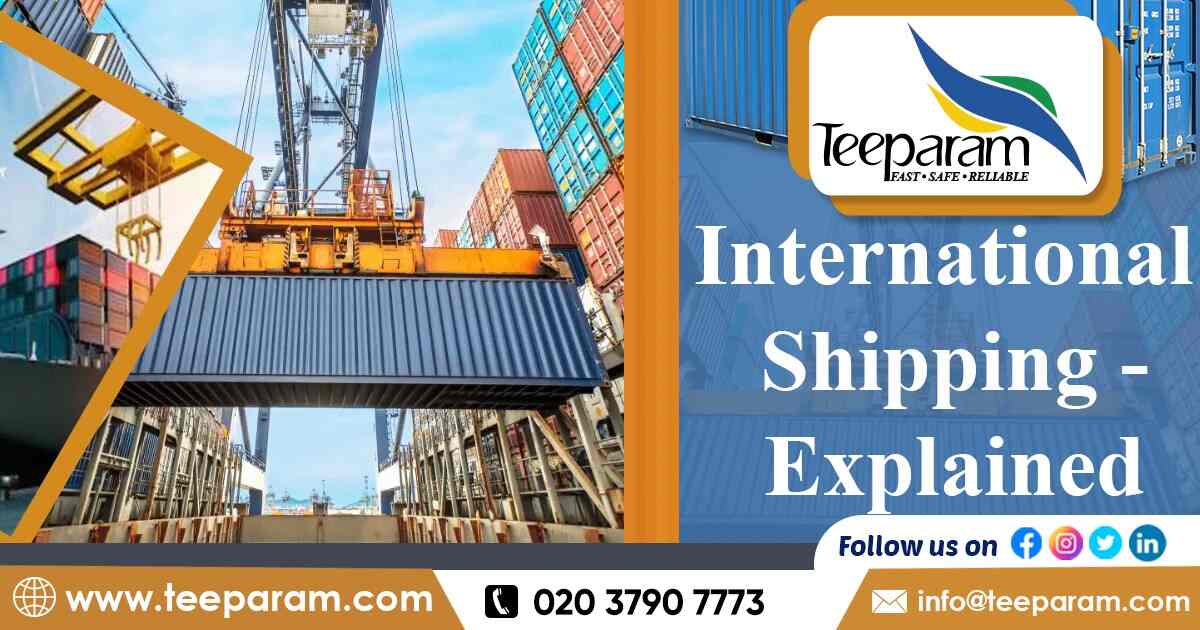
International Shipping – Explained

International Shipping – Explained

Picture this: you’re scrolling through an online shop late at night, coffee in hand, and you spot that perfect pair of boots from a little artisan in Italy. Or maybe it’s a gadget from a tech whizz in Shenzhen. One click, and boom – it’s on its way across the globe. But have you ever stopped to wonder what magic (or mayhem) happens behind the scenes to get it to your doorstep? International shipping is the unsung hero of our connected world, ferrying everything from bananas to smartphones across oceans and borders. And in 2025, with global maritime trade chugging along at a modest 0.5% growth after last year’s 2.2% uptick, it’s more vital than ever. We’re talking over 90% of world trade zipping along by sea alone, clocking in at a whopping $14 trillion annually. For us in the UK, it’s a lifeline – think of all those pints of Aussie lager or French cheeses gracing our shelves. But post-Brexit, it’s got its quirks. Whether you’re a small business owner in Manchester eyeing exports to the States or just a curious shopper in London, let’s unpack this beast in plain English. No jargon overload, promise.

The Basics: What on Earth is International Shipping?

At its heart, international shipping is simply moving goods from one country to another. It’s not just about slapping a stamp on a parcel and hoping for the best – though for small stuff, it can feel that way. We’re talking a massive operation that spans sea, air, rail, and even road for those shorter hops. Back in the day, it was all about clipper ships and horse-drawn carts; now, it’s a high-tech ballet involving containers the size of houses.

Why does it matter? Because without it, your morning avocado toast wouldn’t happen. Global trade relies on this network to keep shelves stocked and economies humming. In 2025, container volumes hit a record 16.61 million TEUs (that’s twenty-foot equivalent units, the standard measure for shipping boxes) in August alone, up 4.4% from last year. For the UK, it’s evolved since we waved goodbye to the EU in 2020. No more seamless lorry runs across the Channel without a mountain of paperwork. Instead, we’ve got new trade deals – like the one with India in May 2025, easing some tariffs – but it’s still a bit of a learning curve.

Think of it like a giant game of pass-the-parcel, but with rules set by everyone from the World Trade Organisation to your local customs office. Key players? Shippers (the folks sending stuff), carriers (the companies with the boats and planes), and freight forwarders (the middlemen who sort the logistics). And don’t forget Incoterms – those snappy acronyms like FOB (Free On Board) or CIF (Cost, Insurance and Freight) that spell out who pays what and when. They’re your best mate for avoiding arguments over who foots the bill if a storm sinks your shipment.

Modes of Transport: Pick Your Poison

So, how does the stuff actually move? You’ve got options, each with its pros, cons, and a price tag to match. Sea freight is the kingpin – slow but cheap for bulk. Massive vessels like those on the Asia-Europe route (think Suez Canal drama) haul everything in those stackable containers. It’s ideal for non-urgents: your new sofa from IKEA’s Polish factory, say. But delays? Oh, they happen. Red Sea tensions have rerouted ships around Africa, adding weeks and costs.

Air freight, on the other hand, is the Ferrari of shipping – lightning-fast but wallet-busting. Perfect for high-value or perishable goodies, like fresh salmon from Norway to Billingsgate Market. It only handles about 1% of volume but punches way above in speed: London to New York in a day. For UK exporters, Heathrow’s a hub, but fuel prices can make your eyes water.

Then there’s multimodal – a mix-and-match approach. Rail’s booming for Europe-Asia via the New Silk Road, trundling goods from Chongqing to Duisburg in under two weeks. Roads for intra-continental jaunts, like your van full of widgets from Dover to Dublin. And for the eco-conscious, intermodal (switching seamlessly between modes) cuts emissions. In 2025, with parcel volumes projected at 217 billion globally, expect more of this hybrid hustle to keep up with e-commerce booms.

Choosing? It boils down to urgency, size, and budget. Shipping a container of tees to Australia? Sea all the way. Time-sensitive tech parts? Wings it is.

How It All Works: From Click to Delivery

Alright, let’s walk through the dance. Step one: you book. Whether via a platform or a freight forwarder, you quote based on weight, dimensions, and route. Pack smart – use sturdy boxes, label clearly, and declare values honestly to dodge fines.

Next, documentation. This is where it gets fiddly. Commercial invoices, packing lists, certificates of origin – and for the UK, EORI numbers for customs. Post-Brexit, even a simple export to France needs an export declaration. Tools like HMRC’s online portal help, but stuff it up and your goods sit in limbo.

Then, the journey. Goods hit the port or airport, get loaded (often in a container for security), and off they go. Tracking apps keep you in the loop – no more staring at the door like a lost puppy. Customs clearance is the bottleneck: duties, VAT (20% in the UK), and inspections. Once cleared, last-mile delivery – that DPD van pulling up.

The whole shebang can take days (air) to months (sea). Pro tip: Use Express for valuables; Standard for bulk.

Costs: The Bitter Pill

Ah, the numbers. International shipping ain’t cheap – expect 2-5 times domestic rates thanks to distance and red tape. A 20ft container from Shanghai to Felixstowe might set you back £2,000-£5,000, per the Drewry World Container Index, hovering around $1,687 for a 40ft in October 2025.

What jacks it up? Fuel surcharges (bunker fuel’s volatile), port fees, insurance (1-2% of value), and tariffs. Brexit added a 21% dip in EU-UK cargo volumes from 2021-2024, hiking costs for cross-Channel hauls. Duties vary – zero under deals like UK-US tweaks in 2025, but up to 10% otherwise. Hidden extras? Demurrage if your container lingers too long at the port.

To trim: consolidate shipments, negotiate rates, or go green for subsidies. Tools like rate calculators demystify it.

Challenges: Bumps in the Road

It’s not all smooth seas. Customs delays – exacerbated by Brexit’s paperwork pile-up – can add weeks, hitting supply chains hard. Geopolitics? Houthi attacks reroute 12% of global trade. Environmentally, shipping guzzles 3% of the world’s oil, spewing CO2. Regulations like IMO 2020’s sulphur caps help, but enforcement is patchy.

For UK folk, the biggie is the 30% shortfall in goods exports versus pre-Brexit projections. Smaller firms struggle with compliance costs. Globally, labour shortages and port congestion (hello, Long Beach backups) keep everyone on their toes.

Tips for Would-Be Shippers

Fancy dipping in? Start small. Vet carriers via reviews. Use freight forwarders for hand-holding – they’re worth the 5-10% fee. Insure everything, track religiously, and build buffers for delays. For UK exporters, tap Gov.uk’s export academy for free webinars. And go digital.

The Future: Greener Horizons

Looking ahead, 2025’s buzzing with change. Tech’s leading: AI predicts routes, slashing fuel by 10%; blockchain zaps paperwork. Sustainability? Cleaner fuels like ammonia, electric vessels, and carbon capture are game-changers, eyeing that $10B green opportunity. Expect more autonomous ships and real-time emissions tracking by 2030. For the UK, joining global pacts could ease Brexit blues.

In the end, international shipping’s a thrilling, tricky thread in our global tapestry. It connects us, challenges us, and keeps the world turning. Next time that package pings ‘delivered’, give a nod to the invisible fleet making it possible. Safe travels – or sails, rather.

Spotlight on a Reliable Partner: Teeparam Logistics

When it comes to navigating the choppy waters of international shipping, finding a dependable partner can make all the difference – especially if you’re in the UK and eyeing routes to places like Sri Lanka or beyond. That’s where Teeparam Logistics shines. Established back in 2009 and based right here in Croydon, they’ve built a solid rep as a one-stop shop for sea, air, and land transport, with a real focus on reliable, door-to-door service that doesn’t leave you guessing.

5 Surprising Ways a Courier Service Can Boost Small Business

5 Surprising Ways a Courier Service Can Boost Small Business

Managing a small business often requires managing multiple tasks simultaneously. The workload can feel excessive, encompassing everything from running your business and managing your finances to promoting your products and providing excellent customer service. On top of all of this, it is essential to make sure that your products are delivered to your customers in a safe, timely, and reliable manner.

The good news is that a courier service can help with that. A courier service can do much more for your company than just move packages, even though many business owners only consider them as delivery partners. In fact, working with a trustworthy courier service can have a direct effect on your productivity, financial success, and reputation.

Enhance Productivity and Save Time

For small business owners, time is one of the most valuable resources. Trying to handle daily deliveries in-house can quickly become stressful due to a lack of personnel and resources. Managing deliveries, from scheduling drivers to creating routes, is likely to take up time that could be utilized to develop your company.

You can regain valuable time by hiring a professional courier service to handle your delivery needs. Courier services have the technology, know-how, and efficient systems necessary to guarantee that your goods are picked up, moved, and delivered on time. They can easily handle any size package, no matter how big or small.

This enables you to concentrate on essential tasks like:

  • Promoting your goods to draw in fresh customers.
  • improving customer service in order to keep current customers.
  • Long-term growth requires innovation and planning.

More specifically, courier services allow you to focus your energies on the things that really matter by relieving you from the burden of logistics. 

Improve Customer Satisfaction and Brand Reputation

The foundation of any successful small business is satisfied customers. A fantastic product or service by itself is insufficient; the way it is delivered has a significant impact on how consumers view your company.

Here are some ways that a courier service can enhance the reputation of your company:

On-time delivery: Consumers value prompt and accurate delivery of their orders.

Safe product handling: The chance of damage is decreased by careful transportation and appropriate packaging.

Transparency in tracking: A lot of courier services give their clients access to real-time tracking capabilities so they can see the precise location of their packages.

This type of professionalism promotes repeat business in addition to increasing customer trust. A smooth delivery process frequently results in outstanding reviews and positive word-of-mouth referrals, which are effective strategies for creating loyal customers. Think about this: especially in the world of internet shopping, people are more likely to choose a company that offers both products and peace of mind.

Lower the Cost of Shipping

Keeping costs under control is one of the most difficult tasks for small businesses. Although many business owners believe that outsourcing deliveries will be too expensive, cheap parcel delivery services may actually bring in long-term cost savings.

This is the reason:

Large-scale savings: Even if your shipping volumes are small, you can still access competitive pricing as courier services often have partnerships and agreed-upon rates with carriers.

Professional guidance: Couriers can advise you on the most economical shipping routes and options for different areas.

No hidden fleet costs: There are continuous costs associated with operating your own delivery trucks, such as fuel, insurance, driver compensation, and upkeep. These overheads are eliminated through outsourcing.

Increase Visibility and Grow Your Business

Customers might be limited to your immediate neighborhood if you only use in-house delivery. However, a courier service allows you to reach a much wider audience than you currently do.

The majority of expert couriers have extensive networks that span states, cities, and even foreign borders. As a result, your small business can enter new markets without having to worry about complicated logistics. Consider the following possibilities for growth:

  • Offering your goods to clients nationwide or across states.
  • exploring international shipping to reach a worldwide audience.
  • competing with larger companies that already provide extensive delivery choices.

Adjust to Shifting Business Requirements

Rarely do small businesses remain the same. During periods of high demand, your business may grow, or you may introduce new product lines that call for new ways to deliver them. Because courier services are designed to be adaptable, they can readily adjust to these changing needs.

For instance:

Seasonal rises: Couriers can manage the spike in orders during holidays or special sales without sacrificing delivery times.

Urgent Deliveries: Do you need to ship a product today? For urgent circumstances, a lot of couriers provide faster services.

Special needs: Courier services can offer customized solutions for anything from oversized items to fragile items.

No matter how quickly things change, this flexibility guarantees that your company will always be reliable and responsive. You can expand without being limited by delivery logistics when you have a reliable courier partner on your side.

Shipping may seem like just another operational task to many small business owners. However, in practice, it can affect long-term growth, brand perception, and customer relationships. For this reason, working with a reputable courier service is a financially sound choice.

By outsourcing your delivery requirements,

  • You can save a lot of time and concentrate on expanding your business.
  • Deliveries that are transparent and quick will satisfy your customers.
  • Reduce expenses while increasing profitability.
  • Reach out to new markets.
  • As your company develops, adapt with ease.

To put it briefly, a professional courier service is about more than just transporting packages; it’s about advancing your company.

Why Choose Teeparam?

Teeparam can assist small business owners in the UK who are searching for a courier service that genuinely understands their needs. Modern technology, adaptable delivery options, and a focus on client satisfaction enable small businesses to optimize processes and deliver outstanding services.

Teeparam is the partner you can rely on, whether you need scalable solutions to support your growth or quick same-day deliveries. Let us take your small business to the next level! Get started by getting in touch with us right now to discover the impact a reputable courier service can have on your company.

Choose a logistics provider that offers door-to-door service

Choose a logistics provider that offers door-to-door service

We all prefer a convenient parcel service to deliver our packages. We want the process to be easy, quick, and safe, whether we’re shipping goods for our expanding company or sending a birthday present to a loved one who lives overseas. Door-to-door delivery services can help with that.

A logistics company that provides this service manages the entire process, from the seller’s warehouse to the customer’s door, rather than just moving items from one location to another. This makes shipping easier, quicker, and more affordable for both individuals and companies.

So, next time you’re planning to send a parcel to India or looking for the cheapest way to send a parcel abroad, choosing a provider with door-to-door service is the smartest decision you can make.

What Is Door-to-Door Delivery?

With door-to-door delivery, your logistics provider handles the entire shipping process from start to finish. They handle the paperwork, transport the package, and deliver it directly to the recipient’s address after picking it up from your location or the seller’s warehouse.

You are not required to leave the package at a post office or service location, in contrast to conventional courier services. Without your involvement, the provider makes sure the package is picked up and delivered to the client.

Door to Door-to-door delivery, how does it work?

Four easy steps can be used to summarize the process:

Pick-up from the sender’s address –  The package is picked up by a courier straight from your house, workplace, or storage facility.

Processing and paperwork –  The supplier takes care of permits, customs paperwork, and any other legal obligations.

Moving the goods –  Packages are transported effectively via local, regional, and international routes.

Final delivery – The package reaches the recipient’s home safely.

This fast process guarantees a seamless experience for both the sender and the recipient.

Why should you Choose a Logistics Provider with Door-to-Door Service?

Just One Point of Contact

Door-to-door service eliminates the need for multiple co-ordinations. The entire process is managed by a single logistics partner, and you can track your package online or via an account manager.

Insurance Protection for Comfort

The majority of trustworthy logistics companies provide shipment insurance. This implies that you are covered if your goods are misplaced or broken. Insurance offers additional security if you’re shipping valuables to India.

Reduced Total Expenses

Although you may believe that premium services are more expensive, door-to-door delivery can actually save costs. Multiple shipping partners, handling, and warehousing require separate payments. When you consider these hidden costs, you save along the way.

Better Efficiency

You can save time and money by outsourcing your logistics. People avoid lengthy lines at post offices, and businesses don’t have to worry about fulfillment. Everything is taken care of by your logistics provider, allowing you to concentrate on more important duties.

Easy Administration and Monitoring

Top providers make use of sophisticated tracking systems. The location of the package is always visible to both you and the recipient. If you’re shipping a package to India, for instance, you’ll be able to track when it passes customs and is ready for delivery.

Saves Customers’ and Senders’ Time

No one enjoys rearranging schedules or standing in line to deliver a package. The courier comes to you when you use door-to-door service. Additionally, GPS-enabled tracking helps guarantee on-time delivery without requiring continuous follow-ups.

You’ll Have Less Paperwork

Clearance forms, shipping documents, and customs declarations can all be confusing. The logistics provider handles the majority of this with door-to-door delivery, which speeds up and reduces stress.

Simple and clear Communication

Regular updates are sent to both the sender and the recipient. You’ll be informed when the package was picked up by the courier, while it was en route, and when it was delivered. This increases trust and decreases misunderstandings.

Shipment Versatility

Almost anything can be delivered door-to-door, including groceries, presents, electronics, apparel, and business supplies. Your provider can manage bulk shipments or a single small box.

The Cheapest Way to Send a Parcel Without Sacrificing Quality

When it comes to shipping, quality is always a major consideration. Even though many people search for the cheapest shipping option, it’s important to take reliability and level of service into account.

Door-to-door logistics companies combine efficiency and affordability.

No hidden costs –  For warehousing, customs, or last-mile delivery, traditional couriers might charge more. The majority of these are included in door-to-door providers’ prices.

Bulk discounts –  Logistics firms frequently have partnerships that enable them to negotiate for reduced prices, which they then pass along to clients.

Saving both time and money –  You can save money and time by avoiding paperwork and delays.

Selecting the best logistics provider ultimately comes down to overall value rather than just initial cost.

The Advantages of Door-to-Door Logistics for Businesses

A key component of customer satisfaction for businesses is logistics. You may set yourself apart from rivals by providing prompt, dependable, and reasonably priced delivery. But how?

  • Increasing client confidence by making deliveries on schedule.
  • Outsourcing fulfillment can lower operating expenses.
  • Permitting global expansion because you can ship to clients anywhere in the world.
  • Using centralized tracking to streamline order management.

Specific Features to Consider in a Logistics Provider

Before selecting a shipping partner, look for:

Proper Permits and Insurance: Verify that they have a license and offer shipment insurance.

Smart Route Planning: Delivery times are shortened and costs are reduced when routes are efficient.

Features for Package Tracking: Instantaneous updates increase client satisfaction.

Positive Reviews: You can learn a lot about dependability from customer reviews.

Flexible Options: When necessary, look for same-day or next-day delivery services.

Door-to-door delivery is the shipping of the future, not just a convenience. Customers benefit from peace of mind, fewer steps, and less stress. Businesses benefit from increased productivity, reduced expenses, and satisfied customers.

Selecting a logistics company that offers door-to-door delivery is the best course of action if you’re trying to find the cheapest way to send a package or intend to ship a parcel to India. It guarantees that your goods arrive at their destination promptly and safely while also saving time and reducing paperwork.

Door-to-door delivery is now a need rather than a luxury in a world where convenience is above all else.

      W W W