Sending a courier from India to the UK is simpler than ever, thanks to modern shipping services that offer convenience, speed, and cost-effectiveness. Whether you’re sending personal items, documents, or business packages, following the right steps can ensure your parcel reaches its destination smoothly. In today’s global economy, shipping parcels between countries has become a necessity, whether for personal purposes or business needs. If you’re looking to send a package from India to the UK, this guide will walk you through the process step-by-step. With international shipping, there are several things to consider, from choosing the right courier to preparing the necessary documentation. In this article, we will guide you on how to successfully send your parcel and ensure it reaches its destination smoothly. With reliable courier services and careful planning, the process can be hassle-free.
Step 1: Choose a Reliable Courier Service
The first and most critical step in sending a package from India to the UK is selecting the right courier service. With many options available, it’s essential to choose one that offers timely deliveries, secure handling, and excellent customer support. Popular international courier companies like DHL, FedEx, Blue Dart, and UPS are well-known, but it’s always good to consider other trusted names.
One such option is Teeparam Logistics, a well-established courier service known for its efficient and affordable shipping solutions. If you’re looking for a reliable, affordable, and efficient solution to send a package from India to the UK, Teeparam Logistics is an excellent choice. With a proven track record in handling international shipments, Teeparam offers top-notch courier services that ensure your parcels are delivered safely and on time. Our service includes convenient options like door-to-door pickup and real-time tracking, so you can monitor your shipment every step of the way. Whether you’re shipping personal gifts, important documents, or business products, Teeparam Logistics stands out with its competitive rates and expert knowledge in international couriers to the UK. They also provide seamless express delivery services, making it easy to meet urgent delivery deadlines. For more details, visit Teeparam Logistics to explore our tailored shipping solutions.
Step 2: Packaging Guidelines
Once you’ve selected a reliable courier, proper packaging becomes vital to ensure the safety of your items during transit. Well-packed parcels can withstand the rigors of international shipping and arrive intact at our destination. Here are some packaging tips to follow:
Choose the Right Box: The box should be sturdy and durable, especially for long-distance shipping. Reinforced cardboard or corrugated boxes are ideal for heavier or fragile items.
Use Cushioning Materials: Items like bubble wrap, packing peanuts, and foam help protect delicate or valuable items.
Seal the Box Well: Use heavy-duty tape to seal all edges securely to prevent the box from opening during transit.
Clear Labeling: Ensure the recipient’s address is marked on the box along with your return address.
Different courier services have specific packaging guidelines, so it’s a good idea to check with your courier before finalizing the package.
Check for Restricted Items
Before you send your package, check the list of prohibited and restricted items for the UK. Items like perishable goods, explosives, and hazardous materials are not allowed in courier shipments. Commonly restricted items include:
Liquids
Firearms
Chemicals
Medicines (unless accompanied by proper documentation)
Always consult your courier service to ensure your package complies with both Indian and UK regulations.
Step 3: Documentation and Customs Requirements
International shipping requires the correct paperwork to ensure smooth customs clearance. Without proper documentation, your package could be delayed or returned. When sending a package from India to the UK, you will need the following documents:
Commercial Invoice: If you’re shipping items for business, this is necessary for customs to determine duties and taxes.
Customs Declaration Form: This form outlines the content of your shipment and its value, allowing customs authorities to assess any applicable taxes.
Identification Proof: You may be required to provide proof of identity depending on the courier’s requirements.
Understanding customs regulations and ensuring that all forms are correctly filled out will help avoid delays or additional fees during transit.
Step 4: Calculate Shipping Costs and Delivery Options
The cost of shipping varies based on the size, weight, and destination of the package. Most international courier services offer shipping calculators on our websites, allowing you to estimate the costs based on your specific requirements.
Package Size and Weight: Heavier and bulkier items cost more to ship. You can reduce costs by packing efficiently and minimizing excess weight.
Express vs. Standard Shipping: If speed is a priority, express delivery services are available, though they may cost more. Standard shipping is more affordable but takes longer.
Insurance: If you’re sending valuable items, consider adding insurance coverage to protect your package against damage or loss.
By calculating the shipping costs upfront, you’ll be prepared for any additional fees such as customs duties or surcharges for remote delivery areas.
Step 5: Booking the Courier and Scheduling Pickup
Once your package is packed and you’ve gathered all the necessary documents, it’s time to book the courier service. Most international couriers, including Teeparam Logistics, allow you to book your service online for added convenience.
Doorstep Pickup: You can schedule a pickup where the courier collects the package directly from your location, saving you a trip to the courier office.
Drop-off: If you prefer, you can also drop off the package at the nearest courier service point.
After booking, you’ll receive a tracking number to follow the progress of your shipment until it reaches the recipient.
Step 6: Track the Shipment and Handle Any Delays
Real-time tracking is a key feature offered by almost every reputable courier service for international shipping. After your parcel is dispatched, you can use the tracking number provided to monitor its movement and estimated delivery date.
Customs Delays: Parcels can sometimes be delayed at customs for inspection. Couriers like Teeparam Logistics have experienced customs agents who work to clear your package swiftly.
Weather or Logistic Delays: Keep an eye on tracking updates for any unexpected delays due to weather or logistical issues. Most couriers provide customer service assistance to help resolve these problems.
Step 7: Tips for Saving on Courier Charges
Shipping internationally can be expensive, but there are ways to reduce costs:
Compare Prices: Always compare prices across multiple couriers. Teeparam Logistics, for example, provides competitive pricing, especially for bulk shipments.
Consolidate Shipments: If you need to ship multiple packages, consolidating them can save on overall shipping costs.
Discounts for Business: Many couriers offer discounts for businesses or regular shippers.
Planning your shipment and taking advantage of special offers or seasonal discounts can help reduce your costs.
In Conclusion, Sending a parcel from India to the UK may seem complicated, but by following this step-by-step guide, you can make the process smooth and stress-free. From selecting a reliable courier service like Teeparam Logistics to understanding packaging and customs requirements, this guide covers all the critical aspects of international shipping. Whether you’re sending personal items or business products, a dependable courier service for international shipping will ensure your package reaches its destination safely and on time. With the right preparation, shipping from India to the UK can be simple, efficient, and affordable. Here is a shorts video on how packages are packed from India branches of Teeparam.
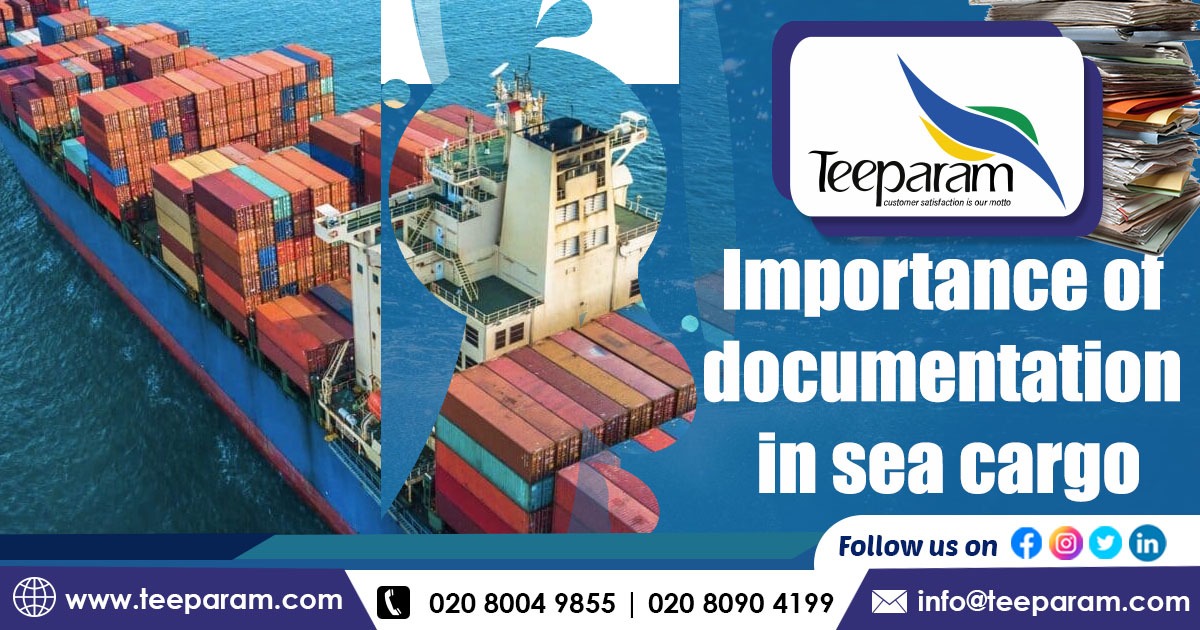
In the world of sea cargo, where massive ships crisscross oceans carrying everything from electronics to raw materials, documentation might seem like a mundane detail. Yet, it’s the backbone of the entire operation. Without proper paperwork, cargo doesn’t move, ports grind to a halt, and businesses lose money. Documentation in sea cargo isn’t just about filling out forms—it’s about ensuring trust, compliance, and efficiency in a complex global supply chain. This article explores why documentation is so critical, how it impacts the maritime shipping industry, and why getting it right matters more than ever.
The Role of Documentation in Sea Cargo
Sea cargo to Sri Lanka involves moving goods across international borders, often spanning multiple countries, legal systems,sea cargosea cargo and regulatory bodies. Documentation serves as the universal language that keeps this process running smoothly. It’s the proof that goods are what they claim to be, that they’re being shipped legally, and that all parties involved—shippers, carriers, and receivers—are on the same page.
At its core, documentation provides clarity. A single shipment might require dozens of documents, including bills of lading, commercial invoices, packing lists, certificates of origin, and customs declarations. Each of these serves a specific purpose, from proving ownership to ensuring compliance with international trade laws. For example, a bill of lading acts as a contract between the shipper and the carrier, a receipt for the goods, and a document of title that can be used to transfer ownership. Without it, cargo could be stuck in a port, racking up storage fees or even being seized.
Documentation also mitigates risk. In an industry where goods worth millions are entrusted to third parties, paperwork establishes accountability. It ensures that everyone knows who’s responsible if something goes wrong—whether it’s a lost container, damaged goods, or a customs violation. In short, documentation is the glue that holds the sea cargo industry together.
Key Documents in Sea Cargo
To understand the importance of documentation, it’s worth looking at some of the key documents involved in sea cargo and their roles:
Bill of Lading (B/L): Often called the most important document in shipping, the B/L serves three purposes: it’s a contract of carriage, a receipt for the goods, and a document of title. It details the type, quantity, and destination of the cargo, ensuring all parties agree on what’s being shipped and where it’s going.
Commercial Invoice: This document provides a detailed breakdown of the goods, including their value, description, and terms of sale. It’s critical for customs clearance and determining duties or taxes.
Packing List: A packing list specifies the contents of each package or container, including weights, dimensions, and handling instructions. It helps port workers and customs officials verify the cargo without opening every box.
Certificate of Origin: This certifies where the goods were made, which is crucial for complying with trade agreements and tariffs. For instance, goods from certain countries might qualify for lower duties under specific trade pacts.
Customs Declaration: This document provides information to customs authorities about the shipment’s contents, value, and compliance with local regulations. Errors here can lead to delays, fines, or even seizure of goods.
Each of these documents must be accurate, complete, and submitted on time. A single typo or missing signature can cause a shipment to be held up, costing businesses time and money.
Why Accuracy Matters
In sea cargo, accuracy in documentation is non-negotiable. A small mistake—like a wrong weight measurement or an incorrect Harmonized System (HS) code—can lead to serious consequences. Customs authorities rely on these documents to assess duties, ensure compliance with trade laws, and prevent illegal activities like smuggling. If something doesn’t add up, they won’t hesitate to delay or reject a shipment.
For example, imagine a shipment of electronics arriving at a port with a commercial invoice listing an incorrect value. Customs officials might suspect undervaluation to evade taxes, leading to an audit or seizure. The shipper could face fines, and the cargo might sit in limbo for weeks. In 2022, the World Customs Organization reported that documentation errors were a leading cause of delays in global trade, affecting nearly 30% of shipments.
Accuracy also builds trust. When documentation is clear and correct, it reassures all parties—shippers, carriers, consignees, and regulators—that the shipment is legitimate. This trust is especially critical in international trade, where parties often don’t know each other personally and rely on paperwork to establish credibility.
The Cost of Poor Documentation
The consequences of inadequate documentation go beyond delays. They can hit businesses where it hurts most: their bottom line. Storage fees, known as demurrage and detention charges, can pile up quickly when cargo is stuck at a port. For instance, a container held up for a week could incur thousands of dollars in fees, depending on the port and carrier.
Fines are another risk. Customs authorities in many countries impose hefty penalties for non-compliance, such as incorrect or incomplete documentation. In severe cases, goods can be confiscated, or businesses may face legal action. For small and medium-sized enterprises, these costs can be devastating.
Poor documentation also damages relationships. A shipper who consistently provides inaccurate paperwork risks losing the trust of carriers, freight forwarders, and customers. In an industry built on reliability, this can lead to lost contracts and reputational harm.
The Role of Technology in Streamlining Documentation
Thankfully, technology is making documentation easier and more reliable. Digital platforms like blockchain-based systems and electronic data interchange (EDI) are transforming how documents are created, shared, and verified. For example, blockchain ensures that documents like bills of lading are tamper-proof and instantly accessible to all parties, reducing the risk of fraud or errors.
Many ports and shipping companies now use electronic platforms to submit and process documents. The Port of Rotterdam, one of the world’s busiest, has adopted a fully digital system called Portbase, which allows shippers to submit documents online, cutting down on paperwork and speeding up clearance. According to a 2023 report by the International Maritime Organization, digital documentation has reduced processing times at major ports by up to 40%.
Automation is another game-changer. Software tools can cross-check documents for errors, generate standardized forms, and ensure compliance with international regulations. These tools are especially valuable for small businesses that may lack the resources to hire dedicated documentation specialists.
However, technology isn’t a cure-all. Human oversight is still essential to ensure that data entered into these systems is accurate. A computer can’t catch every mistake, especially if the error stems from incorrect information provided by a supplier or shipper.
Challenges in Documentation
Despite advances in technology, documentation in sea cargo remains challenging. One major issue is the sheer complexity of international trade regulations. Each country has its own rules, and what’s acceptable in one port might not fly in another. For example, the European Union has strict requirements for certificates of origin, while some Asian countries demand additional sanitary certificates for agricultural goods.
Language barriers also complicate things. Documents often need to be translated or presented in multiple languages, increasing the risk of errors. Cultural differences in how businesses handle paperwork can further muddy the waters.
Another challenge is coordination. A single shipment involves multiple parties—shippers, freight forwarders, carriers, customs brokers, and port authorities all of whom need access to the same documents. Miscommunication or delays in
Smooth Seas, Seamless Docs: Teeparam Logistics Delivers with Care
Teeparam Logistics stands out as a trusted partner in sea freight, delivering exceptional service with a customer-centric approach. Their expertise in handling Full Container Load (FCL), Less-than-Container Load (LCL), and Conventional Load shipments ensures timely, secure, and cost-effective delivery. What truly sets Teeparam apart is its friendly, responsive team, which simplifies the complexities of documentation, ensuring accuracy and compliance with international regulations. With 24/7 support and advanced tracking systems, Teeparam makes the documentation process seamless, giving you peace of mind. Choose Teeparam Logistics for reliable, hassle-free sea freight services backed by outstanding customer care.
Door to door delivery service is something that is not new to us. The concept behind it dates back to ancient royal times when buyers received goods directly at their doors. With the advanced technology and the development of e-commerce platforms, delivery services have evolved rapidly, making it easier for customers to receive products without getting out from their homes.
Door-to-door delivery services are essential in modern society. It has become popular among customers mainly due to the quick and cost-effectiveness. It has also let them shop without physically visiting stores. In today’s fast-paced world, where time is an important factor, doorstep delivery plays a crucial role, especially for individuals with busy schedules who always prioritize convenience.
Top 10 benefits of door-to-door delivery services
Convenience
One of the most important advantages of door-to-door delivery services is the exceptional convenience they offer. Consumers can order products from the comfort of their homes, without any hectic visits to physical stores. Whether you need to shop groceries, electronics, clothes, or furniture, you can easily place orders online and receive your purchases right at your doorstep.
The ease of e-commerce has let you browse through vast product ranges while relaxing at home, making shopping a seamless and enjoyable experience.
Accessibility
Door-to-door delivery services make products available to everyone, including those with limited mobility, elderly individuals, and people living in remote areas. Many essential items, such as pharmaceuticals and grocery products, now can be ordered through home delivery services, making it easier for individuals to get what they need without hassle.
Also, delivery applications and websites have enhanced accessibility by allowing customers to place orders anytime, from any location, ensuring that essential products are always within reach.
Time-Saving
Time is a valuable asset for many of the busy customers, and door-to-door delivery services help then save significant amounts of it. Instead of spending hours walking up and down in stores, browsing aisles, and standing in long checkout lines, consumers can place an order online and receive their items within a short period.
Most delivery services also offer flexible time slots, allowing customers to choose a delivery time that fits their schedule, making it easier to maintain a balance between work and personal life.
Wide Range of Choices
Unlike local stores that have a limited number of products, online shopping with home delivery provides access to a much broader range of products. Customers can explore multiple brands, compare prices, read reviews, and choose the best items that suit their needs.
Certain uncommon or fast-moving consumer goods might not be readily available in nearby stores, but with home delivery services, these products become easily accessible, allowing the marketplace to expand its benefits to both consumers and businesses.
Safety and Security
Contactless delivery options become crucial, especially during the time of the COVID-19 pandemic. These services reduce physical interactions, minimizing exposure to health risks while ensuring public safety.
Additionally, online transactions come with secure payment methods that enhance financial security. Nowadays, many reliable delivery companies also offer tracking systems, letting their customers be informed about the exact location of their shipments.
Cost-Effective
Door to door delivery services can be a cost-effective alternative compared to traditional shopping. By cutting down travel expenses such as fuel costs, parking fees, and public transportation fares, consumers can save money while enjoying the convenience of home delivery.
Moreover, online shopping platforms frequently offer attractive promotional deals or discounts, and price comparison tools that help customers find the best prices on their desired products, further increasing savings.
Enhanced Customer Service
Customer satisfaction is the priority for most delivery services, and many offer real-time tracking, efficient communication, and responsive customer support. If any issues arise during the delivery process, companies quickly address them, ensuring a smooth experience for buyers.
Additionally, customers appreciate the ability to monitor their orders in real-time, reducing uncertainty and enhancing trust in the delivery system.
Adaptability
Door-to-door delivery services serve people with different lifestyles, making shopping easier for busy professionals, parents, and elderly individuals. For working individuals who have tight schedules, these services eliminate the stress of having to fit shopping into their daily routine.
Parents with young children benefit from avoiding the hassle of taking their kids to stores, while elderly individuals who may face mobility challenges find home delivery services a valuable resource for their daily needs.
Support for Local Businesses
Small businesses and local retailers can benefit significantly from door to door delivery services. By offering delivery options, these businesses can expand their customer base to any part of the world.
Supporting local businesses through delivery services contributes to the growth of the local economy and strengthens community ties. It also allows small retailers to compete with larger corporations by providing convenient shopping experiences to their customers.
Efficient Returns and Exchanges
One of the common concerns of online shopping is the ability to return or exchange items. Many delivery services now offer hassle-free return policies, allowing customers to send back products that do not meet their expectations.
This flexibility has enhanced customer confidence in online shopping, knowing that they have an easy way to settle issues if they receive damaged or incorrect products. The streamlined return and exchange process adds an additional layer of convenience to door-to-door delivery services.
Door-to-door delivery services have changed the way consumers shop, offering exceptional convenience, accessibility, and efficiency. From saving time and providing a vast range of product choices to enhancing safety and supporting local businesses, these services play an important role in modern e-commerce.
As the delivery industry continues to evolve, innovations such as faster shipping times, eco-friendly delivery options, and improved customer service will further enhance the shopping experience. Without a doubt, door-to-door delivery services will make life way more easier for consumers worldwide.
If you are a busy professional, a parent, or simply someone who values convenience, using a door-to-door delivery service can bring remarkable benefits to your daily life. With the rapid development in logistics and technology, the future of delivery services promises even greater efficiency and customer satisfaction.
Freight forwarding has become an important service in global trade and logistics. Many businesses must move goods from one country to another, and freight forwarders help make this process smooth and easy. But what exactly is freight forwarding? Who are freight forwarders, and what do they do? Here we will explain everything you need to know about freight forwarding.
What is Freight Forwarding?
It is a service that helps businesses send and receive goods across countries or long distances. It acts as a coordinator between the company that wants to transport goods and the transport services that move them.
A freight forwarder usually takes care of all the details of shipping, including paperwork, customs clearance, and transport arrangements making sure that goods reach their destination safely and on time. Businesses that are involved in international trade or need to move large amounts of goods often use freight forwarding services.
Who Uses Freight Forwarding Services?
Companies that import and export goods use freight forwarding. Businesses that need to transport supplies or products across countries or long distances mostly depend on freight forwarders to handle the process.
Even small businesses or individuals who need to move large quantities of goods can benefit from freight forwarding services by saving them time and effort by managing the complex shipping process on their behalf.
How Do Freight Forwarders Transport Goods?
They use different types of transport depending on the goods and destination. The main transport methods include:
Air Freight – Fast and expensive, suitable for urgent or small shipments.
Sea Freight – Ideal for large shipments, cost-effective but slower.
Road Freight – Used for local and interstate transport.
Railway Freight – Suitable for land transport over long distances.
A freight forwarder always picks the best transport option based on cost, speed, and type of goods.
Steps in the Freight Forwarding Process
Freight forwarding involves many steps to ensure goods are transported efficiently. Here are the main steps:
Origin Handling
The freight forwarder collects goods from the shipper.
Goods are checked and prepared for export.
This step ensures proper documentation and packaging.
Export Haulage
Goods are moved from the warehouse to the origin port or airport.
Different transport methods can be used.
The freight forwarder arranges the most cost-effective transport.
Export Customs Clearance
A customs broker prepares the required paperwork.
Documents such as invoices and shipping details are submitted.
Goods are cleared to leave the country.
Import Customs Clearance
Before goods reach their destination, customs documents are submitted.
A customs broker in the destination country ensures all rules are followed.
This step is important to avoid delays or extra charges.
Destination Arrival and Handling
Goods are inspected and cleared by customs.
Certain shipments may require quarantine checks.
The freight forwarder works with authorities to ensure a smooth process.
Import Haulage
Goods are taken from the warehouse to the final destination.
They are experts in logistics and transport. Freight Forwarders’ job is to make shipping easy for businesses by handling all the complicated steps. They act as the middleman between shippers and transport services.
They even negotiate with airlines, shipping companies, and trucking firms to get the best shipping rates. They also take care of customs paperwork, insurance, and inventory management.
The Role of Freight Forwarders in Supply Chain Management
Freight forwarders play an important role in global supply chains. They help businesses transport goods fast and reduce costs. By managing logistics, they allow companies to focus on their main business activities.
Freight forwarders provide expert advice on packaging, storage, and transport methods and these pieces of advice can help businesses avoid shipping delays, reduce risks, and improve efficiency.
Do Freight Forwarders Handle Sea Freight?
Yes, it is one of the most common transport methods used by freight forwarders. Sea Freight is cost-effective for shipping large goods over long distances. Freight forwarders handle the entire process, covering from port handling, and customs clearance, to delivery arrangements.
Do Freight Forwarders Handle Customs Clearance?
Yes, it is one of the major parts of freight forwarding. Freight forwarders work with customs brokers to ensure all paperwork is completed correctly. This includes preparing invoices, packing lists, and other documents. Proper customs clearance helps businesses avoid delays and extra costs.
Benefits of Using a Freight Forwarder
Using a freight forwarder provides many benefits, including:
Reducing Cost
Freight forwarders negotiate transport rates to get the best prices.
They can consolidate shipments to reduce costs.
Speed
Freight forwarders handle all logistics, saving businesses time.
They ensure a smooth shipping process from start to finish.
Flexibility
Freight forwarders can handle all types of shipments.
They offer tailored solutions for different business needs.
Expertise
Freight forwarders have deep knowledge of international shipping.
They understand customs regulations and logistics challenges.
Peace of Mind
Businesses can trust freight forwarders to handle shipments safely.
They ensure all paperwork is correct and goods reach their destination on time.
Freight forwarding is a crucial service for businesses involved in international trade. Freight forwarders manage the entire shipping process, from handling paperwork to arranging transport. They provide cost savings, time efficiency, and expert logistics support.
By using a freight forwarding service, businesses can focus on their main activities while leaving the hassle of shipping to the experts. Freight forwarders help transport goods by air, sea, road, or rail. They are the ultimate partners for businesses looking to succeed in global trade.
Why Choose Teeparam?
There are several reasons why you should choose Teeparam for all your freight forwarding needs.
Expertise & Experience – With years of industry experience, Teeparam provides comprehensive logistics solutions.
Global Network – Our partnerships with major carriers ensure reliable shipping worldwide.
Cost Efficiency – We negotiate competitive rates to offer cost-effective transport solutions.
Custom Solutions – Whether you need air, sea, road, or rail freight, Teeparam tailors services to your specific needs.
End-to-End Support – From documentation to final delivery, Teeparam manages the entire freight process.
Teeparam Freight Forwarding service and Logistics plays an important part e in global supply chains by providing efficient and reliable freight forwarding services. By managing logistics, they let companies focus on their main business activities while ensuring smooth and timely shipments.
You can always rely on our expert advice on packaging, storage, and transport methods, helping businesses optimize shipping processes and reduce risks.
Looking to expand your business to international markets? Or planning to send a gift to loved ones overseas? Whatever your requirement is, sending a package abroad can be exciting. is an exciting step. However, it is not as easy as you think, with many challenges, particularly packaging. Improper packaging can lead to delays, damaged goods, or rejected shipments, making it crucial to choose the right materials suited to your cargo. Whether you are a business shipping products globally or an individual relocating abroad, it is always better to consult an expert in the field, like Teeparam Logistics, to ensure your shipments follow right packaging for international shipments for a smooth transit experience.
Why is Proper Packaging So Important?
International shipments need to go through multiple handling stages, including customs inspections, warehouse storage, and long transit times. Without proper packaging, goods may be exposed to impact, moisture, or rough handling, increasing the risk of damage. Choosing the right packaging will protect the contents and ensure compliance with shipping regulations, reduce costs, and prevent delays.
How to Choose the Right Box Size
A common mistake in packaging is thinking that bigger is always better. However, using an oversized box can leave too much space, allowing items to shift, shake and increasing the risk of damage. On the other hand, using a box that is too small can lead to overpacking, which might cause the package to burst.
Use boxes that closely match the size of the items being shipped.
Fill empty spaces with cushioning materials like bubble wrap, air cushions, or foam inserts to prevent movement.
Select strong, double-walled corrugated boxes for fragile or high-value goods.
Do not Overfill Your Packages
While it is essential to make full use of the available space inside a box, overstuffing can weaken the packaging structure. Overfilled boxes can break open during handling, leading to lost or damaged goods. Instead, use additional boxes if needed, ensuring that each package is appropriately filled without compromising its integrity.
Use Proper Labeling
Correct labeling is crucial for ensuring that your shipment reaches its destination without any issues. Whether you are planning to move to a new country or need to send parcels to customers abroad, proper labeling helps customs and carriers handle your package efficiently. Key labeling practices include:
Add a clear and correct recipient’s address and contact details.
Removing or blacking out any old shipping labels if reusing boxes.
Use “Fragile” or “Handle with Care” labels for delicate items.
Including necessary customs declarations and compliance documentation.
Types of Transport Packaging available for International Shipments
Different types of packaging are available for different shipping needs. Depending on the size, weight, and fragility of your shipment.
1.Cartons and Boxes
Cardboard boxes are one of the most commonly used packaging solutions for retail goods, electronics, and office supplies. Double-walled corrugated boxes offer durability and protection while remaining lightweight. For added security, foam inserts or bubble wrap can be included to minimize movement inside the package.
2. Wooden Crates
For heavier and high-value shipments such as industrial machinery, auto parts, and sensitive equipment, wooden crates provide superior protection. Crates made from ISPM 15-certified wood ensure compliance with international shipping regulations, preventing customs delays.
3. Shipping Pallets
Palletized shipments give stability and easier handling for bulk orders. Businesses shipping large quantities of products benefit from palletized loads, which allow efficient stacking and secure movement through warehouses and transport hubs. Wooden and plastic pallets are commonly used, depending on the weight and durability requirements of the cargo.
4. Protective Inner Packaging
To protect fragile or high-value items, inner packaging solutions such as foam padding, air cushions, and molded inserts help absorb shocks and prevent breakage. This is important for delicate electronics, office printers, and glass products.
What are the Factors to Consider When Selecting the Right Packaging
1. Weight and Size of Goods
Heavy items require reinforced crates or secure palletization to prevent damage. Lightweight goods, such as clothing or packaged food, can be shipped in sturdy cartons with proper cushioning.
2. Fragility and Protection Needs
Fragile items, such as ceramics and electronics, need additional protective materials to absorb impact during transit.
3.Compliance with International Shipping Regulations
International shipments must fulfill various shipping regulations, including ISPM 15 standards for wooden packaging. Failure to meet these requirements can result in rejected shipments, additional costs, and transit delays.
4.Handling and Storage Conditions
Packages that undergo frequent handling or stacking should be reinforced to prevent damage. Pallet loads should be securely strapped and shrink-wrapped to ensure stability during transport and storage.
5. Balancing Cost and Protection
While excessive packaging increases costs, poor protection risks damaged shipments. Businesses should select cost-effective materials that provide maximum protection.
Common Packaging Mistakes
Many businesses and individuals make packaging mistakes that lead to unnecessary expenses and damaged shipments. Common errors include:
1. Using Weak Materials
Selecting weak or wrong packaging materials increases the likelihood of goods getting damaged. Investing in strong, durable packaging prevents losses due to transit damage.
2. Overpacking or Under Packing
Leaving too much space within a package allows goods to shift, while overpacking can cause boxes to burst. Properly sized packaging with secure inserts maximizes protection.
3. Ignoring Compliance Requirements
Non-compliant packaging can lead to customs holds or rejections. Ensuring all materials meet international regulations prevents unnecessary shipping delays.
4. Poorly Secured Pallet Loads
Unstable pallet loads can shift during transport, increasing the risk of damage. Proper strapping and shrink-wrapping help secure palletized shipments.
5. Failing to Label Fragile Items
Without proper labeling, fragile shipments may be mishandled. Clear “Fragile” labels help shipping handlers take necessary precautions.
Ensures Secure Packaging for International Shipments with Teeparam Logistics
Teeparam Logistics will understand the importance of secure, compliant, and cost-effective packaging for international shipments. Their expert packaging solutions cater to both businesses and individuals, ensuring goods arrive safely at their destination.
Why Choose Teeparam Logistics?
Customized Packaging Solutions:
Compliance with International Standards
Secure Palletization:
Protective Packaging Materials
Expert Guidance
Get in Touch with Teeparam Logistics
For reliable and professional packaging solutions, contact Teeparam Logistics today. Whether you’re shipping business products internationally or sending personal goods overseas, they will ensure your shipments are secure, compliant, and ready for transit. Let Teeparam handle your packaging needs so you can fully focus on expanding your reach globally without any stress about your global shipments.